
London's biggest surprise for first-time visitors is how much of its best is free. Its biggest trap is Sunday. Everything else is a question of how you split the two.
- Free to enter
- British Museum, National Gallery, Tate Modern, Natural History Museum, V&A (permanent collections)
- Worth paying for
- Tower of London, Westminster Abbey, St Paul's Cathedral, Churchill War Rooms
- Closed to sightseeing on Sundays
- Westminster Abbey and St Paul's Cathedral
- Realistic pace
- 3 to 4 substantial stops a day; the Tower alone takes about 2 hours 20 minutes
The biggest surprise in any list of things to do in London is how much of the best is free. The British Museum, the National Gallery, Tate Modern, the Natural History Museum and the V&A charge nothing for their permanent collections. What costs money - and a good share of your day - are the historic buildings: the Tower of London, Westminster Abbey, St Paul's Cathedral.
That changes how to plan. In most cities, a museum is a commitment you make once you've paid for it. In London you can walk into the National Gallery for forty minutes, see the Sunflowers, and leave without feeling you've wasted a ticket. The paid sights, by contrast, reward a proper slot and a fresh morning.
Everything below comes from MEVAYA's curated London data: the same stops, visit durations and booking rules the planner uses. A realistic day holds 3 to 4 substantial stops. London is large enough that the Tube will quietly eat an hour of any day that zigzags.
Five world-class museums that cost nothing
British Museum. The Rosetta Stone, the Parthenon sculptures, the Egyptian mummies. Free, but enormous: choose two or three galleries rather than attempting the building. Booking a free slot is recommended. Open daily 10:00 to 17:00, Fridays until 20:30. About 2.5 hours.
National Gallery. Van Gogh's Sunflowers, Turner, Vermeer, Caravaggio, on Trafalgar Square. One of the great art collections anywhere, and - unusually - small enough to actually finish. Free, open until 21:00 on Fridays, about 1 hour 40 minutes.
Tate Modern. A converted power station on the river, with Rothko, Picasso and the huge Turbine Hall installations. The top-floor viewing level is free as well and looks straight across at St Paul's. About 1 hour 40 minutes.
Natural History Museum. A blue whale skeleton hanging in a hall built like a cathedral, dinosaurs, an earthquake simulator. Free, and the single best thing in London with children. About 2 hours.
Victoria & Albert Museum. Five thousand years of art and design - fashion, jewellery, cast courts with a full-size copy of Trajan's Column in two pieces. Free, next door to the Natural History Museum, with a garden café that is one of the nicest lunch spots in the city. About 1 hour 50 minutes.
The practical consequence: because these cost nothing, you can split them. An hour in the British Museum in the morning and an hour in the National Gallery late on a Friday is a perfectly good way to see both.
The paid historic sights, and how to choose between them
Tower of London. Nine hundred years of fortress, palace and prison, with the Crown Jewels inside. The Yeoman Warder tours are included in the ticket and are genuinely the best part - funny, informative and free once you're in. Book ahead, about 2 hours 20 minutes.
Westminster Abbey. Coronations since 1066, and the graves of Newton, Darwin and Elizabeth I under one roof. Book ahead. Last entry is mid-afternoon (15:30 on weekdays, 15:00 on Saturdays), and it is closed to sightseeing on Sundays. About 1.5 hours.
St Paul's Cathedral. Wren's dome, the Whispering Gallery that carries a murmur all the way round, and 528 steps to a gallery looking straight down the Thames. Book ahead; closed to sightseeing on Sundays, and one-off early closures for services are frequent. About 1.5 hours.
Churchill War Rooms. The underground bunker where the Second World War was run, left largely as it was in 1945 - maps on the walls, pins still in them. Timed tickets, about 1.5 hours, and consistently among the best-rated museums in the city.
If you only pay for one, most first-timers get the most from the Tower: it's the one that is also a day out rather than a single building. The Abbey is the better choice if royal and literary history matters more to you than castles.
Westminster to Covent Garden: the free postcard mile
The most famous stretch of London costs nothing to see, and walks well in one go.
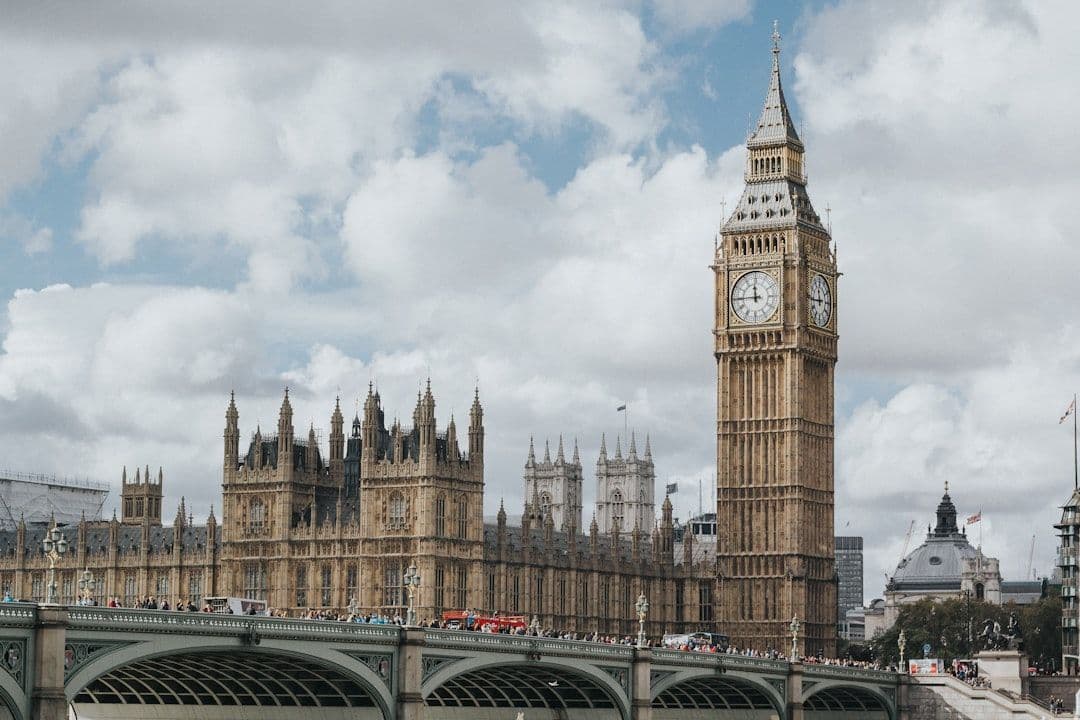
Big Ben and the Houses of Parliament. Big Ben is the bell, not the tower - the tower is the Elizabeth Tower. A fact that wins pub quizzes and changes nothing about the view, which is best from Westminster Bridge or the far bank. About 35 minutes.
Buckingham Palace. The forecourt and the Victoria Memorial are free. Changing the Guard runs on set days, not daily, and the crowd forms an hour before; check the official schedule before building a morning around it. About 50 minutes.
St James's Park sits between the two - the oldest royal park, with a lake, resident pelicans fed at 14:30 and the best view of the palace from the bridge in the middle. From there it's a short walk to Trafalgar Square, with Nelson's Column and the National Gallery along one side, and on to Covent Garden, a 17th-century market square with street performers under the glass roof. Touristy, yes, and still genuinely pleasant.
The river: South Bank, Tower Bridge and the City
The South Bank walk runs east from Westminster Bridge past the London Eye, the National Theatre and Tate Modern: book stalls under Waterloo Bridge, skateboarders in the undercroft, and free views the whole way. About an hour at an easy pace.
Tower Bridge is the one people mean when they say London Bridge. It's free to walk across; the glass walkway at the top is a separate ticket. Two minutes from the Tower of London is St Dunstan in the East, a Wren church bombed in the Blitz and turned into a garden, with ivy growing through the empty windows. Almost nobody's there. Leadenhall Market, a Victorian covered market with a painted glass roof, is a short walk further and at its liveliest on weekdays, since it serves the office district around it.
Sky Garden, a public garden on the 35th floor of the "Walkie Talkie" building, is free - but only with a slot booked online. Slots are released about three weeks ahead and go within days.
Markets, sorted by the day they're worth it
London's markets each have a best day, and visiting on the wrong one can mean shutters instead of stalls.
Borough Market, the best food market in Britain, is closed on Sundays and quieter on Mondays and Tuesdays - arrive hungry and early on any other day. Portobello Road is a general market most of the week, but Saturday is the antiques day, the real thing, and the busiest by a distance. Brick Lane is best on a Sunday, when its market runs. Camden Market trades every day and is loud, chaotic and still the most characterful shopping in the city.
Parks, from central to almost wild
Hyde Park and Kensington Gardens cover 350 acres in the middle of the city, with the Serpentine for boating and swimming and the Diana Memorial Playground for children. Regent's Park has rose gardens and a boating lake, and Primrose Hill just north gives you the whole skyline from a grassy slope. Hampstead Heath, further out, is eight hundred acres of near-wild parkland with year-round swimming ponds and the view from Parliament Hill. This is where Londoners go, and almost no visitors do.
Half a day further out: Greenwich
Greenwich has the Prime Meridian, the Royal Observatory, the Cutty Sark and a park with one of the best skyline views in London. It needs about 2.5 hours on site, and the river boat down from central London is part of the point. The Observatory and the Cutty Sark charge admission and keep their own hours, typically 10:00 to 17:00; the park is free.
London with children
The Natural History Museum is the obvious first choice, and it's free. Add the Diana Memorial Playground in Kensington Gardens, the pelicans in St James's Park, and a river boat to Greenwich, and a family day costs remarkably little. For an evening, Matilda The Musical is one of the most popular family shows in the West End; it runs as a fixed performance of around 2 hours 45 minutes, so book the exact show first and plan the day around it.
The Sunday problem
Two of London's headline sights, Westminster Abbey and St Paul's Cathedral, are closed to sightseeing on Sundays - they're open for worship only. Borough Market is closed too. If your trip includes a Sunday, give it to the free museums, the parks, Camden or Brick Lane, and keep the Abbey and St Paul's for a weekday.
Turning this into an actual day
This page shows what's there; it doesn't sequence it. MEVAYA's London in One Day and London in Two Days guides show what the planner does with these stops - real arrival times, real durations and a route that uses the river rather than crossing it repeatedly. The planner builds the same kind of day around your own choices.
Quick questions
What are the best free things to do in London?
The British Museum, the National Gallery, Tate Modern, the Natural History Museum and the V&A all have free permanent collections. Add the Westminster-to-Covent-Garden walk, the South Bank, the royal parks and Sky Garden (free, but booked about three weeks ahead), and you can fill several days without buying a ticket.
How many things can I realistically do in London in one day?
About 3 to 4 substantial stops, once you count the Tube, walking and lunch. The Tower of London alone takes around 2 hours 20 minutes and the British Museum around 2.5 hours, so a day with both has little room left.
Which London attractions are closed on Sundays?
Westminster Abbey and St Paul's Cathedral are closed to sightseeing on Sundays and open only for worship. Borough Market is closed on Sundays as well. The free national museums, the parks and markets like Camden and Brick Lane are good Sunday choices.
Is the Tower of London worth the ticket price?
For most first-time visitors, yes. It combines the Crown Jewels, 900 years of history and the Yeoman Warder tours, which are included in the ticket. Plan around 2 hours 20 minutes and book ahead.