
Vienna is an easy city to get around. The hard part is that the Habsburgs left behind more palaces than one trip can use, and each of them wants half a day.
- The main decision
- One palace: Hofburg, Schönbrunn or Belvedere - each is roughly half a day
- Book ahead
- Schönbrunn, Hofburg, Belvedere, Kunsthistorisches Museum, Albertina, Leopold Museum
- Closing days
- Kunsthistorisches Museum on Monday (outside summer), Leopold Museum on Tuesday (except July and August)
- Best-value evening
- Standing room at the State Opera: a few euros, on sale 80 minutes before curtain
When it comes to things to do in Vienna, getting around is the easy part: the historic centre sits compactly inside the Ring, and the trams, U-Bahn and buses are among the most straightforward in Europe. The hard part is elsewhere. The Habsburgs left behind more palaces, collections and imperial rooms than one trip can use, and each of them quietly wants half a day.
So the useful way to approach Vienna isn't "what is there" - there's plenty - but "which one of each". One palace, one or two museums, and then enough time left for the things that make Vienna Vienna: coffee houses, the canal in summer, a glass of new wine at the edge of the city.
Everything below comes from MEVAYA's curated Vienna data, the same stops, visit durations and booking rules the planner builds routes from. A realistic day holds 3 to 4 substantial stops. In Vienna, one of those is often a long coffee, and nobody here would call that wasted time.
Inside the Ring: the centre in an afternoon
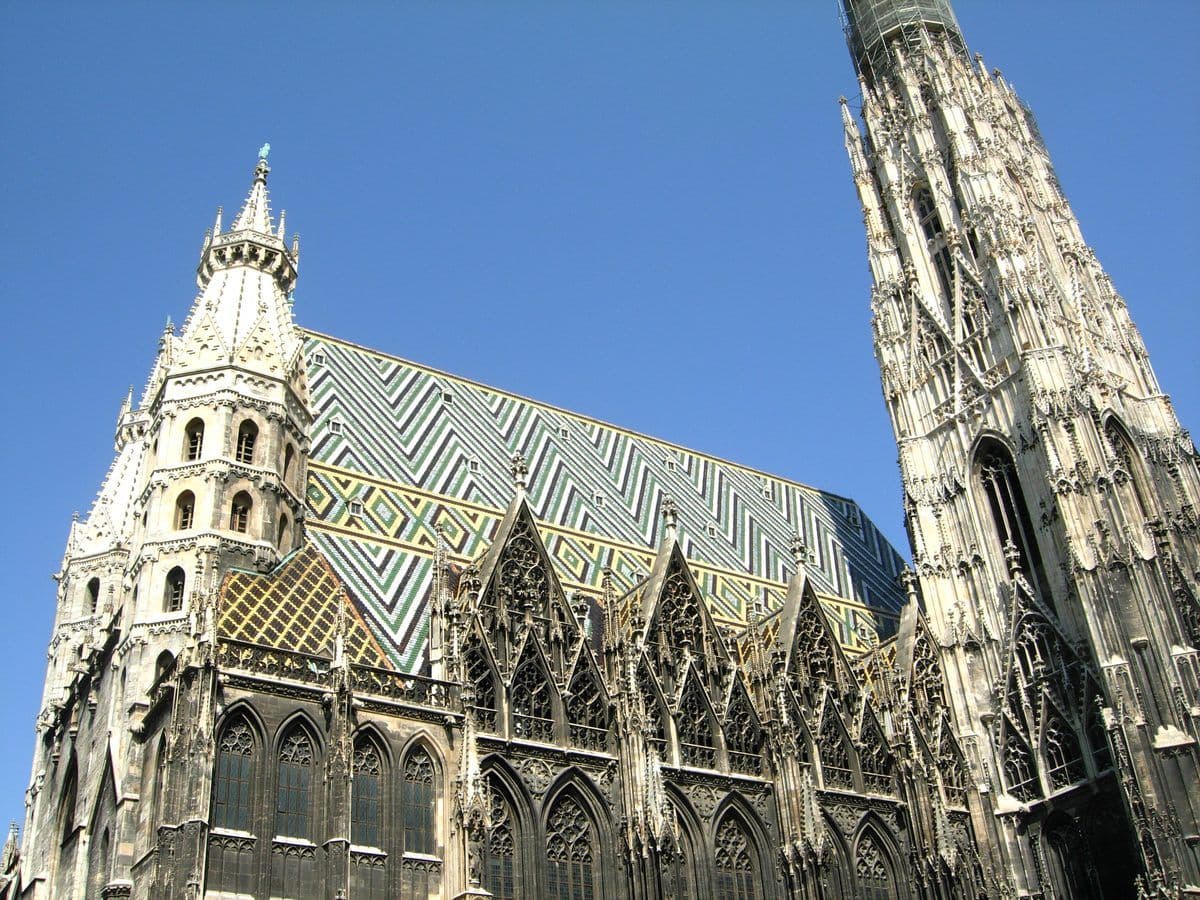
Stephansdom stands at the exact centre of the city, with a roof of 230,000 glazed tiles. The nave is free to enter; the south tower (343 steps) and the catacombs are ticketed separately. About 50 minutes.
From there, the pedestrian axis of Graben and Kärntner Straße runs towards the opera, past the plague column and the Loos House. The brands are international, the architecture makes the walk worth it anyway. Just off it, the Kapuzinergruft, the Imperial Crypt, holds 150 Habsburgs - 12 emperors and 19 empresses - in ten rooms of increasingly elaborate sarcophagi: a more direct encounter with the dynasty than any palace tour, in about 40 minutes.
The Dorotheum, one of the world's oldest auction houses (founded 1707), lets you walk through its galleries for free between sales. The courtyards of the Hofburg are free too. None of this needs booking, which makes the centre a good first afternoon while you're still working out the rest.
The palace question: Hofburg, Schönbrunn or Belvedere?
Most first-time visitors need one of these, not all three. They answer different questions.
Hofburg. The Habsburgs' winter residence for six centuries, right in the centre: the Imperial Apartments, the Sisi Museum and the Silver Collection on one ticket. Choose it if you want the imperial story and Empress Elisabeth in particular, without leaving the centre. The apartments are being redesigned, so some rooms may be temporarily closed. Book ahead, about 1 hour 50 minutes.
Schönbrunn. The summer palace: 1,441 rooms and gardens that are free to enter and enormous, with the Gloriette on the hill behind giving the view the postcards use, and the oldest zoo in the world inside the grounds. Choose it if you want the full palace-and-park day - it takes 2.5 hours for the palace alone, more with the gardens, and it's a U-Bahn ride out. Book ahead.
Belvedere. Two baroque palaces facing each other across a formal garden, holding Klimt's The Kiss, the most visited painting in Austria. Choose it if the art matters more to you than the rooms. The garden between the two is free. Renovation work in the east wing of the Upper Belvedere may close some areas in 2026. Book ahead, about 1 hour 50 minutes.
The art: three museums, three very different afternoons
Kunsthistorisches Museum. The Habsburg collection - the largest Bruegel holding in the world, Vermeer, Caravaggio, Velázquez - in a building as ornate as the paintings. Closed on Mondays outside summer, open until 21:00 on Thursdays. Book ahead, and allow about 2 hours 20 minutes.
Leopold Museum. The world's largest Egon Schiele collection plus major Klimt, in the MuseumsQuartier, the former imperial stables where people sit out on the courtyard furniture all summer. Closed on Tuesdays except in July and August. About 1 hour 50 minutes.
Albertina. Monet, Picasso and Dürer's hare in former Habsburg state rooms above the opera, with some of the most consistently well-curated exhibitions in the city. Open until 21:00 on Wednesdays. About 1 hour 40 minutes.
If you choose Belvedere as your palace, you've already seen Klimt at his most famous; the Leopold then adds Schiele and the other side of Viennese modernism rather than more of the same.
Along the Ring and just beyond
The Ringstraße was built on the old city walls and is lined with the parliament, the neo-Gothic Rathaus, the opera and the great museums. Walking or riding a tram around part of it is the quickest way to understand how the city is laid out. Just outside, the Karlskirche has a lift up into its dome, so you can see the frescoes at arm's length - almost nowhere else lets you do that. The Stadtpark holds the gilded Johann Strauss statue, the most photographed monument in Vienna. Further east, the Hundertwasserhaus, a municipal housing block with undulating floors and trees growing out of the windows, is still lived in, so you see it from the street - which is enough.
Vienna's everyday pleasures
A good part of what visitors remember about Vienna isn't a sight. It's an hour in a classic coffee house, such as Café Landtmann on the Ring, where ordering one coffee entitles you to sit as long as you like. It's the Naschmarkt, the long market between the Karlskirche and the western districts. It's the Donaukanal, the canal through the centre, its banks covered in murals. And it's Neubau, the 7th district around Neubaugasse and Lindengasse, where independent designers, vintage shops and record stores are ten minutes from the Ring.
The Augarten, in the second district, is a baroque park with two enormous wartime flak towers still standing in it - impossible to demolish, so the city grew around them. Locals only, and quietly extraordinary.
Evenings: standing room, wine taverns and the Ferris wheel
The Vienna State Opera offers guided tours by day, but the better idea is the evening: standing-room tickets cost a few euros and go on sale 80 minutes before curtain. It's one of the great cultural bargains in Europe, and the one Viennese habit most visitors never hear about.
Vienna is the only capital with commercial vineyards inside its city limits. A Heuriger is the tavern where the grower sells their own new wine with a cold buffet; the ones in Grinzing and Nussdorf are a tram ride out, and many open only on some days of the week. Pair one with the Kahlenberg, a free hilltop viewpoint over the city, the Danube and the vineyards, reachable by bus. Plan about two hours for the Heuriger alone - it isn't a drink, it's an evening.
The Riesenrad, the giant Ferris wheel from 1897 in the Prater, runs daily until midnight. The wheel is ticketed; the park and the fairground around it are free to wander.
Summer in Vienna
From spring to autumn, temporary bars open along the Donaukanal - deckchairs, cheap spritz, no dress code, no reservations. In July, Vienna goes to the Donauinsel, a 21-kilometre artificial island in the Danube with free bathing areas along its length. The Leopold Museum also opens on Tuesdays in July and August, when it otherwise closes.
Vienna with children
The Haus der Musik is the obvious first choice: an interactive sound museum where you can conduct the Vienna Philharmonic on screen and be heckled by the orchestra if your timing is off. It's open until 22:00 every day and genuinely good for adults too. The Prater, the Schönbrunn gardens with the zoo, and the Donauinsel in summer fill the rest.
Closing days: Vienna is forgiving
Compared with Paris or Barcelona, Vienna is gentle about closing days. Most of the big sights open daily. The two to watch: the Kunsthistorisches Museum closes on Mondays outside summer, and the Leopold Museum on Tuesdays outside July and August. Churches like Stephansdom and the Karlskirche close to sightseeing during services.
Turning this into an actual day
This page shows what Vienna holds; it doesn't order it. MEVAYA's Vienna in One Day and Vienna in Two Days guides show what the planner does with these stops - real arrival times, real visit durations, and a route that keeps Schönbrunn on its own half-day instead of wedged between two museums.
Quick questions
What are the best things to do in Vienna for a first-time visitor?
For most first trips: Stephansdom and the centre inside the Ring, one Habsburg palace (Hofburg, Schönbrunn or Belvedere), one major museum (the Kunsthistorisches Museum, the Leopold Museum or the Albertina), a coffee house, and one evening at the State Opera in standing room or at a Heuriger.
Should I visit Schönbrunn, the Hofburg or the Belvedere?
Choose Schönbrunn for the full palace-and-gardens experience, the Hofburg for the imperial story and Empress Elisabeth in the city centre, and the Belvedere if Klimt's The Kiss matters most. Each takes roughly half a day, so most first-time visitors choose one.
How many things can I realistically do in Vienna in one day?
About 3 to 4 substantial stops. Schönbrunn Palace alone takes around 2.5 hours and the Kunsthistorisches Museum around 2 hours 20 minutes, so either one plus the centre inside the Ring is already a full day.
How do standing-room tickets at the Vienna State Opera work?
Standing-room tickets for evening performances cost a few euros and go on sale 80 minutes before the curtain rises. They are one of the best-value cultural experiences in Europe, but availability depends on the performance.