
Two days, 10 stops, no day overloaded — the MEVAYA planner splits Rome so each day stays walkable and nothing on the route is closed when you arrive.
- Suggested duration
- Two full days, about 09:00–17:52
- Major stops
- 10 across both days, plus lunch each day
- Getting around
- About 4.9 km on foot over two days, 9.2 km by public transport
- Planned for
- Tuesday and Wednesday
- Suits
- A first visit that wants more than Rome's headline sights
Day 1
09:00Piazza Navona · about 40 min
Walk · 0.4 km · about 11 min
09:51Pantheon · about 46 min
Walk · 0.8 km · about 16 min
10:53Trevi Fountain · about 29 min
11:22Lunch break · about 60 min
Walk · 1.2 km · about 22 min
12:44Roman Forum & Palatine Hill · about 138 min
Walk · 0.8 km · about 16 min
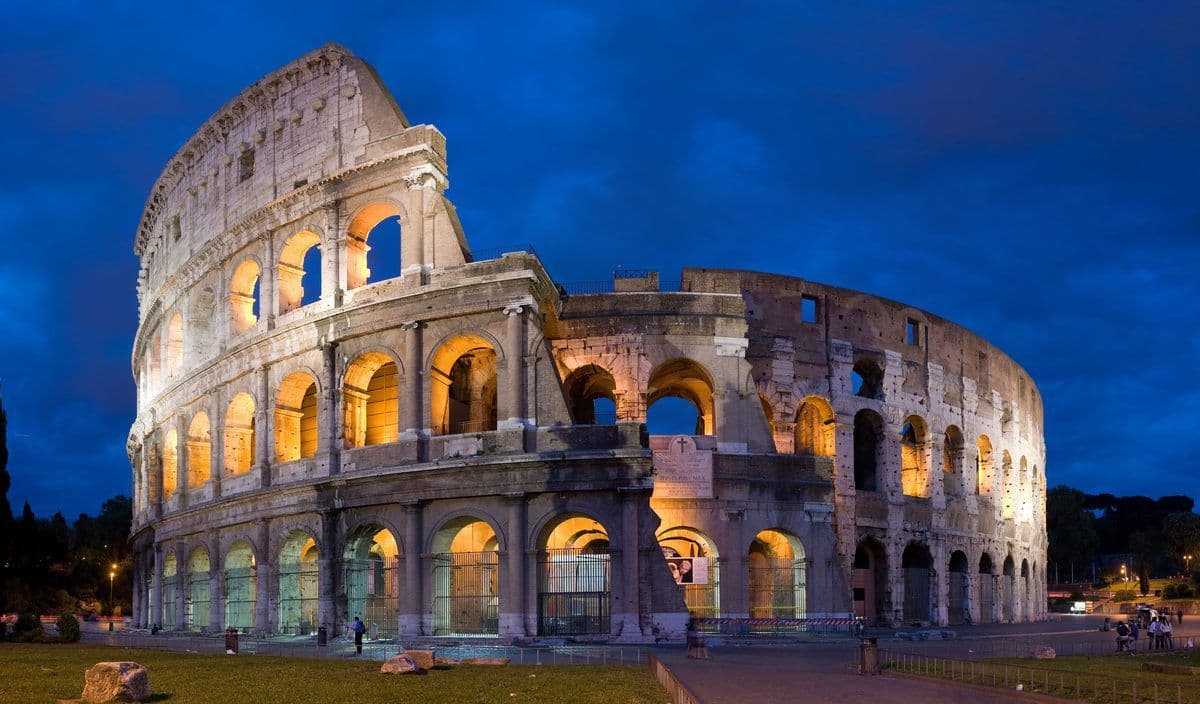
15:18Colosseum · about 104 min
Day 2
09:30Palazzo Massimo · about 104 min
Walk · 1.8 km · about 29 min
11:43Basilica di San Clemente · about 69 min
12:52Lunch break · about 60 min
Public transport (planner estimate) · 4.3 km · about 24 min
14:16Centrale Montemartini · about 92 min
Public transport (planner estimate) · 2.9 km · about 20 min
16:08The Aventine Keyhole · about 29 min
Public transport (planner estimate) · 2.0 km · about 18 min
17:00Gianicolo terrace · about 52 min
Build this around your own pace
This is one realistic version. The planner rebuilds it around your start time, interests, pace and the day of the week — with the same verified Rome data.
Plan your Rome dayTwo thousand years, stacked and still in use. Rome doesn't separate its eras — a 12th-century church sits on a 4th-century basilica on a Roman house, and all of it is still open. The centre is walkable but relentless underfoot, the heat is real, and the best-value hours are early morning and the long golden evening.
Two days is enough to see Rome without racing it. This plan comes straight from the MEVAYA planner: 10 stops across a Tuesday and a Wednesday, with Piazza Navona, Colosseum and Roman Forum & Palatine Hill among the fixed points and the rest chosen and ordered by the planner.
Day 1, stop by stop
09:00–09:40 — Piazza Navona. Built on the footprint of a Roman stadium, which is why it is shaped like a racetrack. Bernini’s Four Rivers fountain in the middle, baroque façades all around, free and open at every hour. It is a public open-air space with no ticket and no closing day.
09:51–10:37 — Pantheon. Nearly two thousand years old, still the largest unreinforced concrete dome on earth, and open to the sky through the oculus. Now ticketed for visitors, with a small fee and a timed entry. Verified opening hours: Daily 09:00–19:00, last entry 18:30. Closed 1 Jan, 15 Aug, 25 Dec. A paid entrance ticket has been mandatory since July 2023; ticket price rose again from 1 July 2026. Free during services for worship.
10:53–11:22 — Trevi Fountain. A baroque theatre-set of a fountain wedged into a small square, and genuinely spectacular when you can see it. It is a public open-air space with no ticket and no closing day.
11:22–12:22 — Lunch. The planner reserves time to eat right after Trevi Fountain, so the afternoon continues from where the morning ended instead of detouring for food.
12:44–15:02 — Roman Forum & Palatine Hill. The civic centre of the ancient world, and the hill above it where the emperors actually lived. Bigger and less signposted than people expect — the Palatine side is consistently emptier and has the better views. Verified opening hours: Daily 08:30–19:30 (same seasonal pattern as the Colosseum, single combined ticket). SUPER sites (House of Augustus, House of Livia, Palatine Museum, Santa Maria Antiqua) need a separate SUPER ticket and are occasionally closed independently. Book ahead: this stop needs a reservation or a timed ticket.
15:18–17:02 — Colosseum. Fifty thousand spectators, eighty entrances, and a system for flooding the arena. The standard ticket is a combined one that also covers the Forum and Palatine across the road, valid over 24 hours. Verified opening hours: Daily 08:30–19:30 (varies seasonally, opens as early as 16:30 close in deep winter). Closes early on specific dates for events (e.g. Good Friday Way of the Cross). Arena floor and underground need a separate, timed ticket. Book ahead: this stop needs a reservation or a timed ticket.
Day 2, stop by stop
09:30–11:14 — Palazzo Massimo. The best Roman art in Rome, and almost nobody goes: entire frescoed rooms from Livia’s villa reassembled upstairs, walls of garden painting from 30 BC. Five minutes from Termini station. Verified opening hours: Tue–Sun 09:00–19:45; closed Monday.
11:43–12:52 — Basilica di San Clemente. Three buildings stacked on top of each other across two thousand years: a 12th-century church, over a 4th-century basilica, over a 1st-century Roman house and Mithraic temple with an underground stream still running through it. Three hundred metres from the Colosseum and a fraction as crowded. Verified opening hours: Mon–Sat 09:00–12:30 and 15:00–18:00, Sun 12:00–18:00. Book ahead: this stop needs a reservation or a timed ticket.
12:52–13:52 — Lunch. The planner reserves time to eat right after Basilica di San Clemente, so the afternoon continues from where the morning ended instead of detouring for food.
14:16–15:48 — Centrale Montemartini. Classical marble statues displayed among the turbines and diesel engines of a decommissioned power station. The contrast is startling and it is one of the calmest museums in Rome. Verified opening hours: Tue–Sun 09:00–19:00; closed Monday.
16:08–16:37 — The Aventine Keyhole. Look through the keyhole of the Knights of Malta gate and the dome of St Peter’s appears perfectly framed at the end of a hedge tunnel, in another country, a kilometre and a half away. Free, and one of the few genuinely secret things left in Rome. It is a public open-air space with no ticket and no closing day.
17:00–17:52 — Gianicolo terrace. The hill above Trastevere with the widest view over the historic centre — every dome and rooftop laid out at once. Free, never crowded, and a cannon is fired here at noon every day. It is a public open-air space with no ticket and no closing day.
Why this split works
It uses the early morning for Piazza Navona — an open-air sight with no opening hours, which is the best use of the time before ticketed venues open.
The day covers about 3.2 km on foot, with no public transport needed.
It reaches Palazzo Massimo at 09:30, with a 30-minute wait for opening at 09:30 built in.
The day covers about 1.8 km on foot and 3 public-transport hops (about 9.2 km), used only where walking would cost more time than it saves.
Realistic timing
Times come from the planner's visit-length model: every stop starts from its typical duration, is adjusted for a couple at a balanced pace, and every walk gets a small buffer. The day runs from 09:00 to 17:02.
The longest stops are Palazzo Massimo (104 minutes) and Centrale Montemartini (92 minutes). If a stop takes longer than planned, the planner in the app reschedules the rest of the day around it.
To keep the day realistic, the planner left out 3 further candidates rather than squeezing them in at a run.
What to change if…
It rains. Piazza Navona, Trevi Fountain and Roman Forum & Palatine Hill are largely outdoors. Rain-safe alternatives in MEVAYA's Rome data include St Peter's Basilica and Castel Sant'Angelo.
You are travelling with children. Switch the party to "family" in the planner and it keeps walks shorter (it caps a single walking leg at about 1.1 km) and favours family-friendly stops such as Villa Borghese gardens and Villa Celimontana.
You start late. Planned with an 11:00 start, the planner drops Pantheon and Trevi Fountain and keeps the rest of this route.
Mobility is limited. Pantheon: Wheelchair accessible via a small ramp to the left of the entrance, aside from some cobblestones just outside. Roman Forum & Palatine Hill: An elevator at the entrance now provides access (previously a steep ramp), but much of the interior terrain is rough and only partially wheelchair-friendly. Choose "step-free" in the planner and it filters out stops known to be inaccessible.
Before you go
Built by the MEVAYA planner from MEVAYA's curated Rome data. Opening hours were checked against official and independent sources in September 2026; the route, times and durations are the planner's own output, not estimates written by hand.
Quick questions
Is two days enough for Rome?
Two days covers 10 of the 33 curated sights in MEVAYA's Rome data at a balanced pace — the classic centre plus a second, quieter layer of the city.
Which days is this plan built for?
It was planned for a Tuesday and Wednesday. The planner checks every stop's closing days, so other days may produce a different route.
Do I need to book anything?
Yes: Roman Forum & Palatine Hill, Colosseum and Basilica di San Clemente.