
Most lists tell you what to see in Rome. Few tell you how many of it fits in a day, or which stops sit close enough together to share one. This one does both.
- Curated stops here
- 25, grouped into 6 areas
- Realistic pace
- 3 to 4 substantial stops per day, once travel time is counted
- Booking required for
- Colosseum, Roman Forum & Palatine Hill, Vatican Museums, Galleria Borghese
- Free entry
- 12 of the 25 stops below
Most "things to do in Rome" lists are a flat count - 15, 20, 30+ - sorted by nothing in particular. None of them say how many of it fits in a single day, and none group stops by where they actually are, so a first-timer following one ends up crossing the city three times before lunch.
This list does two things differently. It's grouped by area, so you can see at a glance which stops share a neighbourhood and which need their own day. And every entry carries a real visit duration, its booking requirement and whether it's free - taken from MEVAYA's own curated Rome data, the same data the planner itself builds routes from.
A realistic day fits 3 to 4 of these properly, once you count the walk between them and a lunch break. The Vatican Museums alone (170 minutes) can fill half a day on its own, and the Colosseum-Forum-Palatine combination is easily another.
Centro Storico: fountains, squares and the Pantheon
Trevi Fountain. A baroque theatre-set of a fountain wedged into a small square, genuinely spectacular when you can actually see it. Free, open-air, about 25 minutes.
Pantheon. Nearly two thousand years old, still the largest unreinforced concrete dome on earth, open to the sky through the oculus. Now ticketed with a small fee, about 40 minutes.
Piazza Navona. Built on the footprint of a Roman stadium, hence the racetrack shape - Bernini's Four Rivers fountain in the middle, baroque facades all around. Free, open at every hour, about 35 minutes.
Campo de' Fiori market. A morning market square - produce, spices, pasta, oil - under the statue of a philosopher burned here in 1600. Free to wander, about 45 minutes, mornings only.
Ancient Rome: Colosseum, Forum and beyond
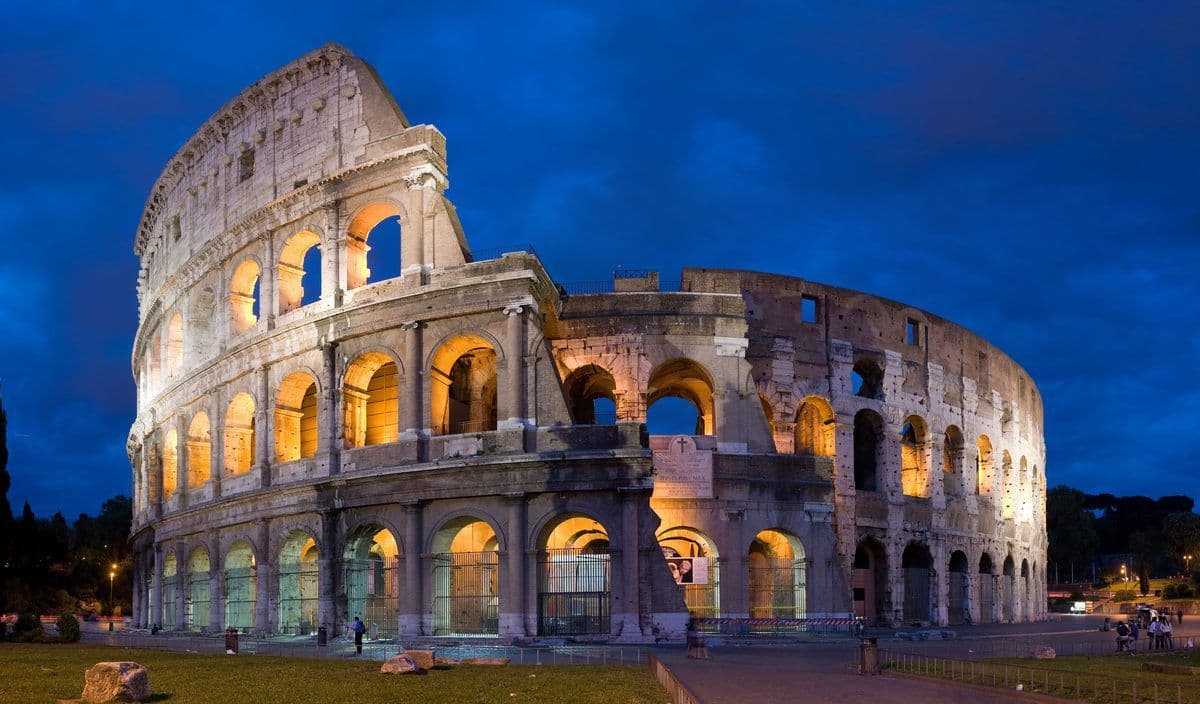
Colosseum. Fifty thousand spectators, eighty entrances, a system for flooding the arena. The standard ticket is combined with the Forum and Palatine across the road, valid over 24 hours. Booking required, about 90 minutes.
Roman Forum & Palatine Hill. The civic centre of the ancient world, and the hill above it where the emperors actually lived - bigger and less signposted than people expect, the Palatine side stays consistently emptier. Booking required, about 120 minutes.
Circus Maximus. The chariot-racing track, now a huge grass oval you can walk straight across, Palatine ruins rising along one side. Free, about 30 minutes.
Baths of Caracalla. Imperial baths for 1,600 people at a time, walls still standing thirty metres high, mosaic floors underfoot. Ten minutes from the Colosseum and a fraction of the visitors. About 70 minutes.
Villa Celimontana. A hillside park with a playground and an Egyptian obelisk, five minutes from the Colosseum, used mostly by people who live nearby. Free, about 50 minutes.
Capitoline Hill and Monti
Capitoline Museums. The oldest public museum in the world, on Michelangelo's own square above the Forum - the she-wolf, the bronze Marcus Aurelius, and a terrace cafe with a rooftop view most visitors never find. About 110 minutes.
Monti quarter. The neighbourhood behind the Forum - vintage shops, independent designers, small bookshops, a square where people actually sit. Central and somehow still not overrun. About 70 minutes.
Palazzo Massimo. The best Roman art in Rome, and almost nobody goes - entire frescoed rooms from Livia's villa reassembled upstairs. Five minutes from Termini station. About 90 minutes.
Vatican City
Vatican Museums & Sistine Chapel. Seven kilometres of galleries ending in the Sistine Chapel - the route is one-way, you cannot skip ahead, and most people badly underestimate the time this needs. Booking required, about 170 minutes.
St Peter's Basilica. The largest church in the world, free to enter, Michelangelo's Pieta just inside the door. The dome climb is a separate ticket and 551 steps. Free, about 75 minutes.
Castel Sant'Angelo. Hadrian's mausoleum turned papal fortress, connected to the Vatican by a private escape corridor. The rooftop terrace has the best view of St Peter's dome anywhere. About 70 minutes.
Trastevere, the Gianicolo and the Aventine
Trastevere. Cobbled lanes, ivy, laundry lines, and the oldest church in Rome dedicated to the Virgin, 12th-century mosaics glowing gold above the altar. Free to wander, best done without a plan. About 60 minutes.
Gianicolo terrace. The hill above Trastevere with the widest view over the historic centre, every dome and rooftop laid out at once. Free, never crowded, a cannon fires here at noon daily. About 45 minutes.
Giardino degli Aranci. A walled orange grove on the Aventine with a terrace over the whole city, thirty seconds from the keyhole. Free, the calmest sunset spot in Rome. About 35 minutes.
The Aventine Keyhole. Look through the Knights of Malta gate and the dome of St Peter's appears perfectly framed at the end of a hedge tunnel, a kilometre and a half away. Free, about 25 minutes.
Enoteca La Vite. A wine bar on a Trastevere square with what regulars call the best by-the-glass list in the quarter. Opens 17:00, about 70 minutes.
Villa Borghese and the wider south
Villa Borghese gardens. Eighty hectares of park above the Spanish Steps, a boating lake, bike hire, a small zoo, the Pincio terrace over the whole centre. Free, about 70 minutes.
Galleria Borghese. Bernini's sculptures - Apollo and Daphne, the Rape of Proserpina - in the villa they were carved for, plus Caravaggios. Two-hour timed entry with a hard visitor cap. Booking required, about 130 minutes.
Appian Way. The road that carried Roman legions south, still paved with its original basalt slabs, lined with tombs and umbrella pines. Closed to traffic on Sundays. Free, about 110 minutes.
Centrale Montemartini. Classical marble statues displayed among the turbines of a decommissioned power station - a startling contrast and one of the calmest museums in Rome. About 80 minutes.
Enoteca Cuverie. A small family-run wine bar with local Lazio bottles and good cheese. Closed Wednesday and Sunday, about 80 minutes.
What's deliberately left off this list
No stop above appears just because it's famous. Rome's most crowded combination, Colosseum plus Forum plus Palatine, is included in full because it earns its place - but treat it as its own half-day, not something to squeeze between two other stops.
This list also doesn't pretend every stop suits every visitor. The Vatican Museums reward an early, well-booked morning and punish anyone who wanders in expecting a quick look; Galleria Borghese's hard two-hour cap rewards planning days ahead and punishes anyone who shows up hoping for a walk-in.
Turning this into an actual day
This list doesn't sequence itself - it's the input, not the output. MEVAYA's Rome in One Day and Rome in Two Days guides show what the planner actually does with a version of this list: real arrival times, real durations, a route that doesn't backtrack. The itinerary planner explains the six steps behind how any of that gets built.
Quick questions
How many things to do in Rome can I actually fit in one day?
Realistically 3 to 4 substantial stops, once you count travel time between them and a lunch break. The Vatican Museums alone can take up half a day, and Colosseum plus Forum plus Palatine easily fills the rest.
Which Rome attractions need booking ahead?
The Colosseum, the Roman Forum & Palatine Hill, the Vatican Museums and Galleria Borghese all require booking - Galleria Borghese has a hard two-hour visitor cap, so it needs the most lead time.
Is the Colosseum-Forum-Palatine combination worth doing in one visit?
Yes, and the standard ticket already combines all three, valid over 24 hours. Together they take about 3.5 to 4 hours, so treat it as its own half-day rather than adding much else around it.