
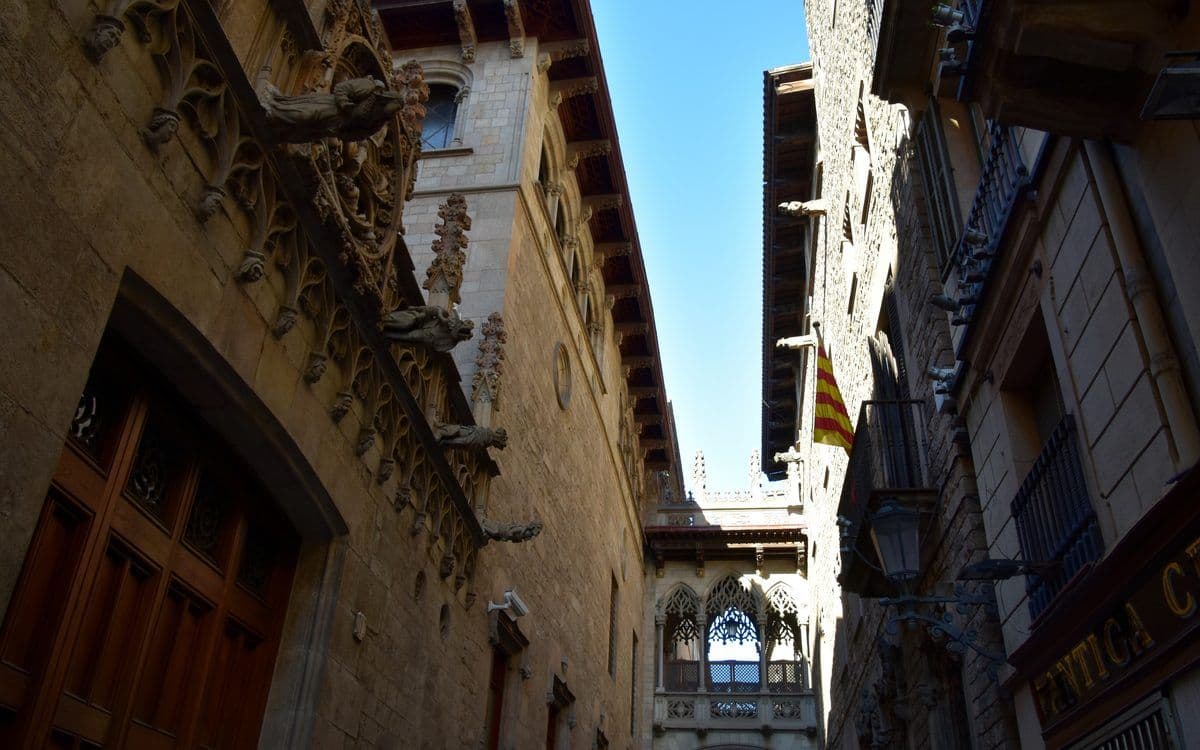
Barcelona is four cities stacked on top of each other: Gaudí's, the medieval one, the hill and the sea. Most first visits spend too much of their time on the first and too little on the other three.
- The four Barcelonas
- Gaudí and modernisme, the medieval old town, Montjuïc, the beaches
- Book well ahead
- Sagrada Família, Park Güell (Monumental Zone), Casa Batlló, Casa Milà, Palau de la Música
- Closed on Mondays
- Picasso Museum, MNAC, Fundació Miró, MUHBA, CosmoCaixa
- Realistic pace
- 3 to 4 substantial stops a day; the Sagrada Família alone takes about 1 hour 40 minutes
Most lists of things to do in Barcelona miss one thing: Barcelona is really four cities stacked on top of each other. There is Gaudí's Barcelona - the Sagrada Família, the houses on Passeig de Gràcia, Park Güell. There's the medieval city of narrow lanes around the cathedral. There's Montjuïc, the hill above the port with a castle, museums and gardens. And there's the sea, a real city beach a short walk from the old town.
Most first visits spend too much time on the first and too little on the other three. That's understandable - Gaudí is why many people come - but his buildings are also the most expensive, the most booked-out and the most crowded part of the city. The rest is cheaper, calmer and often free.
Everything below comes from MEVAYA's curated Barcelona data, the same stops, visit durations and booking rules the planner builds routes from. A realistic day holds 3 to 4 substantial stops. In Barcelona that usually means one timed Gaudí slot, one neighbourhood and one long lunch, which is less a compromise than the local operating system.
The Gaudí question: how many of his buildings do you need?
The honest answer for most first trips is three: the Sagrada Família, one of the two houses, and Park Güell. Beyond that, the buildings start to repeat their best idea at an increasing price.
Sagrada Família. Gaudí's unfinished basilica, the most visited attraction in Spain and, since 2026, the tallest church in the world. The interior light through the stained glass is the part photographs never convey. Timed-entry ticket, book well ahead. About 1 hour 40 minutes.
Casa Batlló or Casa Milà. Casa Batlló is the more theatrical - bone-like balconies, a scaled roof, not a straight line anywhere - and the more expensive. Casa Milà (La Pedrera) looks carved out of a cliff and has a rooftop of sculpted chimneys; it's cheaper and, for many visitors, the better interior. Both are on Passeig de Gràcia and both need a timed ticket. About an hour each. If you only pay for one, the other's façade is free from the pavement, and genuinely impressive from there.
Park Güell. The mosaic terrace, the dragon staircase and views across the city. Much of the park is free, but the famous parts sit inside a Monumental Zone with a timed ticket and a daily cap. About 1 hour 25 minutes.
Modernisme without Gaudí. The Palau de la Música Catalana, a concert hall with an inverted stained-glass dome, is visitable on guided tours only and is the most consistently underrated interior in the city. The Hospital de Sant Pau, twelve Art Nouveau pavilions linked by tunnels, is a UNESCO site that matches the Sagrada Família for craft and draws a fraction of its crowd. About 1.5 hours.
The old town, in three moods
Barcelona's old town sits between La Rambla and the Parc de la Ciutadella, and each of its three quarters feels different.
The Gothic Quarter is the medieval core: narrow lanes, hidden squares, fragments of Roman wall. It's free to wander at any hour and genuinely quiet before 10:00, which makes it the right way to start the day before ticketed sights open. The cathedral keeps thirteen geese in its cloister, one for each year of the martyr Eulàlia's life. Underneath Plaça del Rei, the MUHBA city history museum lets you walk through four thousand square metres of excavated Roman streets - the best thing in the quarter, and most visitors walk straight past it.
El Born is smaller and more polished: the Picasso Museum, in five connected medieval palaces, holds the largest collection of his early work. Santa Maria del Mar, the Catalan Gothic church built by the medieval port workers, is famously plain and famously perfect, and free outside guided-tour hours. The Santa Caterina market, under a wave-shaped mosaic roof, is where locals shop.
El Raval is the roughest of the three, and the most alive: vintage shops, record stores, MACBA's white museum with skateboarders colonising the square outside. The Boqueria market is on its edge; the stalls at the entrance are tourist-priced theatre, the actual traders are at the back.
La Rambla runs along the side of all this. Walk it once for the sense of the city's spine, and then leave it.
Montjuïc: the hill most visitors skip
Montjuïc holds a fortress, botanical gardens, the Olympic ring and sweeping sea views, and it is the least crowded major sight in Barcelona. The park is free; plan half a day if you want the museums too.
The MNAC, the palace at the top of the Montjuïc steps, holds the world's finest collection of Romanesque church frescoes, lifted wholesale from Pyrenean chapels. The Fundació Joan Miró has the largest Miró collection in the world, with a sculpture terrace. Both are closed on Mondays. The Port Cable Car, running since 1929 between the harbour and the hill, is genuinely dramatic and expensive for the length of the ride. The Magic Fountain below the MNAC puts on free evening light-and-music shows, usually Thursday to Saturday; the schedule changes by season and shuts down entirely during drought restrictions, so check before planning your evening around it.
The sea
Barceloneta Beach is a real city beach a short walk from the old town, with playgrounds along the promenade and public showers in season. Bogatell and Mar Bella, fifteen minutes further northeast, have the same sea with a fraction of the crowd - the better choice on any hot weekend. On the way, the Museu Marítim fills the medieval royal shipyards, stone halls built to construct galleys indoors, which are extraordinary even before you get to the replica warship inside.
Sunsets, sorted by effort
The Bunkers del Carmel, Civil War anti-aircraft platforms on a hilltop, give a genuine 360° view over the whole city. Free, no ticket, a proper climb, and the best sunset in Barcelona. The Mirador de Colom, a lift inside the Columbus monument at the bottom of La Rambla, is the low-effort alternative: cheap, quick, rarely queued. Hotel rooftop bars in the Eixample mostly let non-guests up; drinks are expensive, and the view across the grid to the Sagrada Família usually justifies one.
Barcelona with children
CosmoCaixa, a science museum with a genuine flooded Amazon rainforest inside, is the best museum in Barcelona for children by a wide margin (closed Mondays). The beaches, the Parc de la Ciutadella with its rowing lake and the zoo next door, and the Museu Marítim fill the rest easily. Tibidabo, Spain's oldest funfair on the mountaintop, opens mainly at weekends for most of the year, with extra weekdays in summer and school holidays - check the calendar before you go up.
Free entry hours worth planning around
Several of the best museums have free slots. The Picasso Museum is free on Thursday afternoons and the first Sunday of the month. The MNAC is free on Saturdays from 15:00 and on the first Sunday of the month. The MUHBA is free on the first Sunday of the month. The Parc del Laberint d'Horta, Barcelona's oldest garden, is free on Sundays and Wednesdays. Expect longer queues in all of these slots; free is popular.
Mondays and Sundays
Monday is Barcelona's museum day off: the Picasso Museum, the MNAC, the Fundació Miró, the MUHBA, CosmoCaixa and the Monestir de Pedralbes are all closed. Gaudí's buildings, the old town and the beaches are unaffected, which makes Monday a good Gaudí day. On Sundays, the Boqueria and Santa Caterina markets are closed, and most shops too; the Maremàgnum mall on the old harbour is one of the few places reliably open.
One more 2026 note: Camp Nou is under renovation. The classic stadium tour is suspended, replaced by a shorter museum visit with a viewpoint over the construction site.
Turning this into an actual day
This page shows what Barcelona holds; it doesn't order it. MEVAYA's Barcelona in One Day and Barcelona in Two Days guides show what the planner does with these stops - real arrival times, real visit durations and routes that keep the Gaudí slots from colliding with each other across the city. The planner builds the same kind of day around whichever of the four Barcelonas you choose.
Quick questions
What are the best things to do in Barcelona for a first-time visitor?
For most first trips: the Sagrada Família, one Gaudí house (Casa Batlló or Casa Milà), Park Güell, the Gothic Quarter and El Born, and an evening on Montjuïc or at the Bunkers del Carmel. With a beach afternoon, that fills two to three days at a realistic pace.
How many Gaudí buildings should I visit in Barcelona?
Three is enough for most visitors: the Sagrada Família, one of the two houses on Passeig de Gràcia, and Park Güell. The house you skip can still be seen from the street for free, and both façades are worth the stop.
Which Barcelona attractions need to be booked in advance?
The Sagrada Família, the Monumental Zone of Park Güell, Casa Batlló, Casa Milà and the Palau de la Música Catalana all run on timed tickets or guided tours. The Sagrada Família and Park Güell sell out first, so book those before anything else.
Can you visit Camp Nou in 2026?
Only partially. The stadium is under renovation through 2026, so the classic tour of the pitch and dressing rooms is suspended. A shorter immersive visit with the club museum and a viewpoint over the construction replaces it, and match days restrict access further.