
Venice is small enough to cross on foot in under an hour, and dense enough that you'll get lost doing it. What's scarce here isn't things to see. It's the quiet hours to see them in.
- The scarce resource
- Quiet hours: St Mark's and Rialto are different places before 10:00
- Book ahead
- St Mark's Basilica, Doge's Palace, Gallerie dell'Accademia, Peggy Guggenheim Collection
- The islands
- Murano about 2.5 hours, Burano nearly 3 - each one is half a day
- Closed on Tuesdays
- Peggy Guggenheim Collection and Ca' Rezzonico
Venice is small enough to cross on foot in under an hour, and dense enough that you'll get lost doing it. That's the first thing to understand about all the things to do in Venice: the sights are close together, and the distances are not the problem. The problem is the crowd, which arrives mid-morning, concentrates on a handful of streets between the station, Rialto and St Mark's, and thins again in the evening.
So the most useful way to think about things to do in Venice isn't by neighbourhood, it's by time of day. Some places are only really themselves early. Some are best in the evening. And some - the quiet sestieri, the islands - are fine at any hour because the crowd never quite reaches them.
Everything below comes from MEVAYA's curated Venice data, the same stops, visit durations and booking rules the planner builds routes from. A realistic day holds 3 to 4 substantial stops, fewer if one of them is an island.
Before 10:00: Rialto and St Mark's while they still belong to you
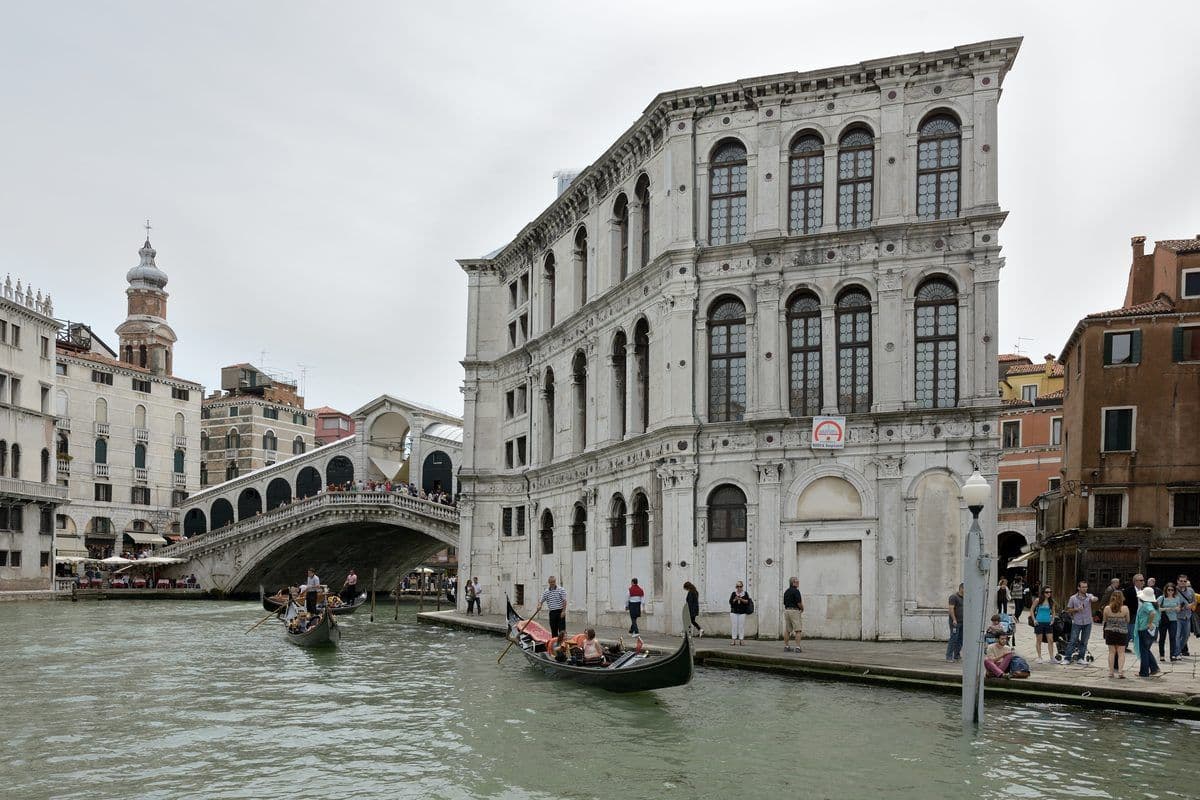
Rialto Bridge. Four hundred years old, built of Istrian stone on twelve thousand timber piles, and for centuries the only way to cross the Grand Canal on foot. Free and always open, and a completely different place at seven in the morning than at eleven. About 30 minutes.
St Mark's Square. The basilica at one end, the campanile in the middle, arcades down both sides. Free, open at every hour, and the one square in Italy where arriving early is less a tip than a requirement. About 40 minutes.
Right beside it, the Giardini Reali are a small restored garden with a pergola and a café - thirty seconds from the busiest square in Italy and almost silent. Useful to know at eleven, when you'll want it.
The two big tickets: the Basilica and the Doge's Palace
St Mark's Basilica. Eight thousand square metres of gold mosaic above your head, and a floor of buckled marble that shows you the city sinking. Booking a slot is strongly advised. The Pala d'Oro and the loggia with the bronze horses are separate small tickets and both worth it. Visiting hours are shorter on Sundays (from 14:00), and access can be closed at short notice for high tide or religious functions. About an hour.
Doge's Palace. The seat of the Venetian Republic for a thousand years - the vast council chamber, the armoury, and the Bridge of Sighs, which you cross from the inside on the way to the prisons. Open daily, until 19:00 from April to October. Book ahead, about 1 hour 50 minutes.
Together, these two fill most of a morning. Putting both straight after an early walk around the square is the one sequence in Venice that nearly always works.
Venice's art, sorted by how much time you have
If you have an hour: the Scuola Grande di San Rocco. Tintoretto spent twenty-three years covering this building with more than sixty paintings, still in the rooms he painted them for. They hand out mirrors at the door so you can study the ceilings without breaking your neck. About 70 minutes.
If you have two: the Gallerie dell'Accademia, five centuries of Venetian painting - Bellini, Giorgione, Titian, Tintoretto, Veronese. If you want to understand why Venetian colour is different, this is where it's explained. Book ahead; short hours on Mondays. About 1 hour 50 minutes.
If you'd rather have the 20th century: the Peggy Guggenheim Collection - Pollock, Picasso, Ernst and Calder in the unfinished palazzo where she lived, with a terrace directly on the Grand Canal. Book ahead, closed Tuesdays, about 1.5 hours.
If you want to see inside the palaces you've been admiring from the water: Ca' Rezzonico, kept as an 18th-century Venetian house, with a ballroom and frescoed ceilings. Closed Tuesdays, about 80 minutes.
The Venice people still live in
Cannaregio and the Ghetto. The northern sestiere where about a third of Venice's remaining residents actually live: long canal-side fondamente, laundry overhead, and the world's first Jewish ghetto, whose name gave the word to every other language. Free, about 70 minutes.
Campo Santa Margherita. The big student square in Dorsoduro - market stalls in the morning, children playing football in the afternoon and the cheapest spritz in Venice in the evening. The closest thing the city has to ordinary life. Five minutes away, the Squero di San Trovaso is one of the last working gondola boatyards; you watch from across the canal while they work.
Castello, at the eastern edge, has the Giardini della Biennale - the largest proper park in Venice - and the pine wood of Sant'Elena, with benches facing the lagoon. Twenty minutes from St Mark's, and there isn't a souvenir shop in sight.
Small things that make a Venice day
The traghetto. A working gondola ferry that crosses the Grand Canal where there's no bridge, for a couple of euros. Venetians stand for the crossing. It's the same boat and the same water as a ninety-euro gondola ride, for about ninety seconds - which is roughly how long most people want to be in a gondola anyway.
Scala Contarini del Bovolo. A spiral Renaissance staircase in a quiet courtyard between Rialto and St Mark's, with a small terrace at the top. Most people walk past the alley without noticing it. About 25 minutes.
San Giorgio Maggiore. Palladio's church on its own island, facing the Doge's Palace across the water. The church is free; the bell tower has a lift up to a 360° view that rivals St Mark's campanile with a fraction of the queue. About an hour including the vaporetto.
Libreria Acqua Alta keeps its books in bathtubs and a full-size gondola because the floor floods, and has a staircase made of old encyclopaedias. Charming and genuinely crowded. The T Fondaco rooftop beside Rialto gives the best free view over the Grand Canal - free, but with a timed 15-minute slot booked online.
The islands: Murano and Burano are half a day each
Murano, twenty minutes by vaporetto, is where the glass furnaces have been since 1291, when the Republic moved them off the main islands to stop fires. Watch a demonstration, then walk the canals, which are quieter than anything in Venice proper. If you buy glass, buy it from a workshop with a furnace behind it and look for the Vetro Artistico Murano trademark. About 2.5 hours.
Burano, forty minutes further out, has painted fishermen's houses in saturated colour, a leaning campanile and a lace tradition. It's the most photographed island in the lagoon and still worth the trip. Close to 3 hours.
Doing both in one day is possible. It also means spending a large part of that day on boats, which is lovely for the first hour and a scheduling fact after that.
Evenings
Venice gets its streets back after the day-trippers leave. The Fondamenta dei Ormesini in Cannaregio is a canal-side run of small bars where Venetians drink standing on the pavement, with the water beside them and nobody trying to seat you. The Zattere, the long southern promenade facing the Giudecca canal, is where the city walks in the evening, with gelaterias along the way and the sunset landing directly on the water.
Venice with children
The Museo di Storia Naturale, in a palazzo on the Grand Canal, has a seven-metre dinosaur skeleton and an aquarium, and is one of the few Venice sights children actively ask to go back to (usually closed Mondays). The Giardini and Sant'Elena have playgrounds and space to run. Parco Savorgnan, five minutes from the station, is a walled garden with a playground: the obvious first or last stop when you're carrying luggage and everyone has had enough.
Before you go: closing days and the access fee
The Peggy Guggenheim Collection and Ca' Rezzonico close on Tuesdays; the Gallerie dell'Accademia keeps short hours on Mondays, and the Natural History Museum usually closes on Mondays. St Mark's Basilica opens only in the afternoon on Sundays.
Venice also charges day visitors an access fee on selected peak days, while overnight guests are exempt but need to register. The dates and rules are set each year, so check the city's official calendar for your date before you travel.
Turning this into an actual day
This page shows what Venice holds and when each part works best; it doesn't put it in order. MEVAYA's Venice in One Day and Venice in Two Days guides show what the planner does with these stops - real arrival times, real visit durations, vaporetto legs where they save time, and St Mark's early rather than at noon.
Quick questions
What are the best things to do in Venice for a first-time visitor?
For most first trips: St Mark's Square and the Basilica early in the morning, the Doge's Palace, the Rialto Bridge, one art stop (the Scuola Grande di San Rocco or the Gallerie dell'Accademia), an afternoon in Cannaregio or Dorsoduro, and an evening on the Zattere or the Fondamenta dei Ormesini.
Is it worth visiting Murano and Burano?
Yes, if you have at least two days. Murano takes about 2.5 hours and Burano close to 3, including the walk around, and both need vaporetto time on top. On a single day in Venice, the historic centre is the better use of your time.
What can you do for free in Venice?
A great deal: St Mark's Square, the Rialto Bridge, Cannaregio and the Ghetto, Campo Santa Margherita, the Squero di San Trovaso, the Zattere, the Giardini and the church of San Giorgio Maggiore are all free. The T Fondaco rooftop is free with an online booking.
Is a gondola ride worth it, or is the traghetto enough?
The traghetto, a gondola ferry across the Grand Canal for a couple of euros, gives you the same boat and the same water for about ninety seconds. A full gondola ride is a longer, far more expensive experience; worth it if it matters to you, but not necessary to feel what it's like.