Venice city view

Venice

No cars, no shortcuts, no straight lines

Italy · 37 stops · Vaporetto / walking

What Venice is actually like

Venice runs on foot and on water, which changes every assumption about how a day fits together — a stop 300 metres away can be a ten-minute walk around a canal. The reward for planning it properly is the version of the city most day-trippers never reach: the quiet sestieri, the empty churches, the early morning before the cruise crowds land.

Canal navigationQuiet sestieriLagoon islands
Plan a day in Venice

The 3 top stops

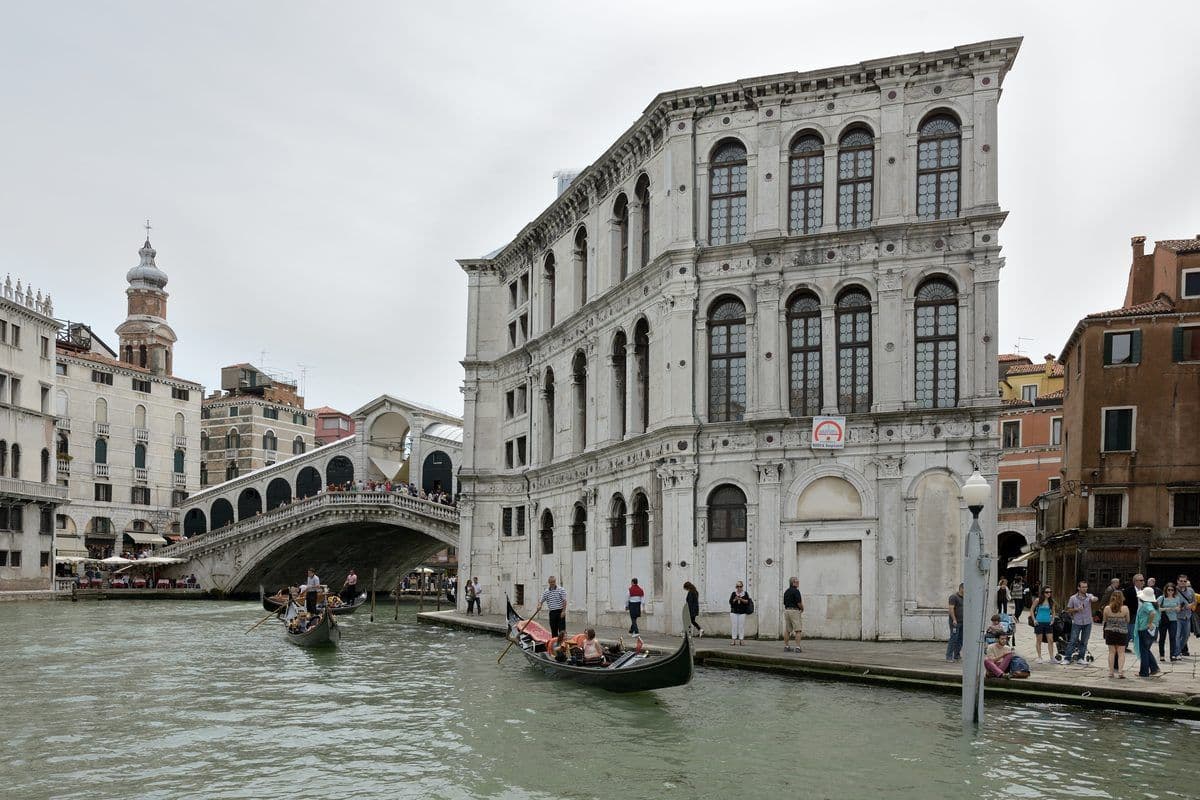
Rialto Bridge

Four hundred years old, built of Istrian stone on twelve thousand timber piles, and for centuries the only way to cross the Grand Canal on foot. Free, always open, and completely different at seven in the morning.

30 min· FreeTravel caution

Public open-air space — accessible at any time, no ticket

⚠ Worth knowing nearby: Restaurants directly overlooking the bridge routinely lure passersby with a "free Bellini" and a tourist menu — the view is real, the food and value usually aren't. Venice's cicchetti bars a few streets away are both cheaper and more authentic.

♿ Accessibility: NOT wheelchair accessible — the bridge has stone steps on both sides with no ramp. Cross the Grand Canal by vaporetto (water bus) instead, which is free for wheelchair users.

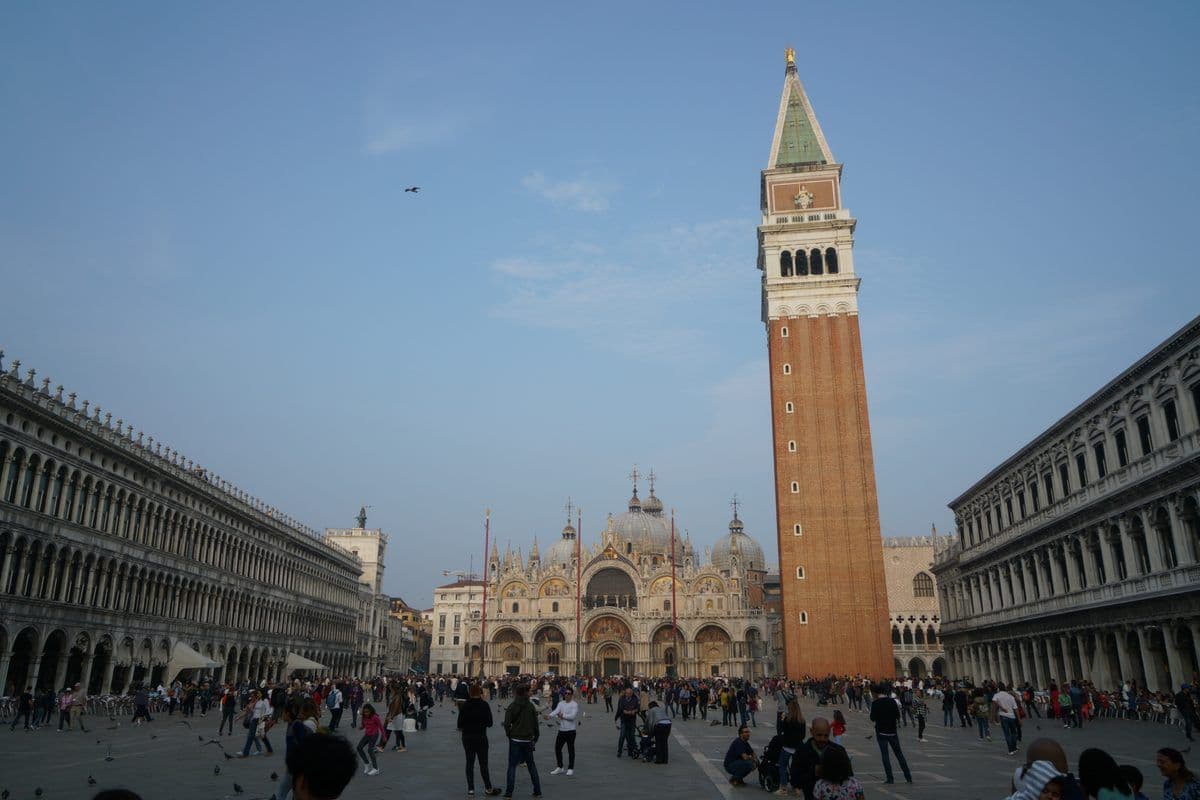
St Mark's Square

Napoleon called it the drawing room of Europe. The basilica at one end, the campanile in the middle, arcades down both sides — and pigeons, water and marble everywhere.

40 min· FreeTravel caution

Public open-air space — accessible at any time, no ticket

⚠ Worth knowing nearby: Sitting at an outdoor café table here can multiply the price of a coffee several times over via the cover charge (coperto) plus table service — the same espresso costs a fraction standing at the bar. There's no scam in this, just check the price list before you sit down.

♿ Accessibility: Flat, with smooth paving and no cobblestones — one of the most wheelchair-friendly parts of Venice.

St Mark's Basilica

Eight thousand square metres of gold mosaic above your head, and a floor of buckled marble that shows you the city sinking. The Pala d’Oro and the loggia with the bronze horses are separate small tickets and both worth it.

60 minBOOK AHEAD

Mon–Sat 09:30–17:15, Sun 14:00–17:15, last entry 16:45

♿ Accessibility: Wheelchair accessible — to skip the long line, use the exit at the left side of the church as the entrance.

Before you go

Currency
Euro (€). Cards are accepted almost everywhere; bacari counters sometimes prefer cash for a €1.50 glass.
Emergency
112 for everything.
Access fee
Venice charges day visitors an entry fee on peak days, booked online in advance, with a QR code that can be checked at the station and main entry points. Overnight guests are exempt but still need to register through their accommodation. Check the official city site for this year's dates before you travel — the rules change annually.
Getting around
The vaporetto is the bus. Single tickets are expensive (around €9.50), so if you will make more than two trips buy a 24/48/72-hour pass. Validate every time you board. Walking is usually faster than the boat for anything inside the main islands.
Airport transfer
Marco Polo has no train station — this is the one city here where the airport connection isn't rail at all. An ACTV public or ATVO express bus covers the mainland stretch to Piazzale Roma in 20-25 minutes (around €10), and Piazzale Roma is where cars and buses stop and the vaporetto (water bus) takes over for the rest of the way in. The Alilaguna water bus runs directly from the airport dock into the canals — closer to your hotel if it's not near Piazzale Roma, but a slower and pricier way to arrive, around an hour and €15-18.
Tipping
Not expected. Check for coperto (cover charge per person) and any servizio already added — both must be on the menu.
Meal times
Lunch 12:00–14:30 , dinner from 19:00 . Venice eats and closes earlier than Rome; many kitchens stop by 22:00 and bacari often shut 14:00–16:00.
Sundays & Mondays
The catch that ruins itineraries: the Rialto market is closed Sundays (fish hall also Mondays), several of the best bacari close Sundays entirely, and the Accademia closes at 14:00 on Mondays.
Toilets
Public toilets cost about €1.50 and there are few of them. Most bacari have none at all. Museums you have paid to enter are the reliable option — use them when you have the chance.
Dress code
Churches, including St Mark's, require shoulders and knees covered, and it is enforced at the door.
Acqua alta
High water mainly from autumn to early spring. The city posts forecasts and puts out raised walkways; the sirens sound a few hours ahead. Bring waterproof shoes in November rather than buying plastic overshoes at four times the price.
Luggage
There are no cars, and bridges have steps. A heavy wheeled suitcase over fifteen bridges is a genuinely miserable arrival — pack lighter than you would elsewhere.
Tap water
Safe and good, from the street fountains too. Bring a bottle.

And the quieter ones

The stops that rarely make a top-ten list but consistently make a better day.

  • Traghetto crossing

    A working gondola ferry that crosses the Grand Canal where there is no bridge, for about two euros. Venetians stand for the crossing. It is the same boat, the same oarsmen and the same water as a ninety-euro gondola ride, for a minute and a half.

  • Cannaregio & the Ghetto

    The northern sestiere where about a third of Venice’s remaining residents actually live — long canal-side fondamente, laundry overhead, and the world’s first Jewish ghetto, whose name gave the word to every other language.

  • Squero di San Trovaso

    One of the last working gondola boatyards, with an alpine-looking wooden building because the original boatbuilders came down from the Dolomites. You watch from across the narrow canal while they work.

  • Campo Santa Margherita

    The big student square in Dorsoduro — market stalls in the morning, children playing football in the afternoon, and the cheapest spritz in Venice in the evening. The closest thing the city has to normal life.

There are 30 more curated stops in Venice.

We don't list them all here — it would read like a phone book. Open the planner and use the stop dropdown to browse every one of the 37 stops with its full detail: hours, closed days, typical visit length, booking lead time and what to know before you go. Mark any of them essential and the route builds around your choice.

Browse all 37 stops

A day MEVAYA would actually plan

One example, for Saturday, October 3

This is genuine planner output — a couple, a balanced pace, fixed defaults — not a hand-written itinerary. Your own dates, pace and interests will produce a different day.

Free to view · no account needed
  1. 1

    09:00

    Traghetto crossing

    22 min

  2. 2

    09:31

    Rialto Bridge

    40 min

  3. 3

    10:29

    Scuola Grande di San Rocco

    81 min

  4. 4

    12:00

    Campo Santa Margherita

    46 min

  5. M

    12:54

    Osteria Il bacio

    60 min

  6. 6

    14:05

    Ca' Rezzonico

    92 min

  7. 7

    15:49

    Squero di San Trovaso

    29 min

  8. 8

    16:44

    T Fondaco rooftop terrace

    52 min

Interactive map · OpenStreetMap · stop order

Score 97/100 · 8 stops · built from the city guide — pick your own date and this changes.

Plan your own dates

What to book before you fly

The stops where turning up on the day genuinely doesn't work.

  • Venice access fee

    before you travel

    Required for day visitors on peak days, with a QR code. Overnight guests are exempt but must still be registered. Rules and dates change every year — check the official city site.

  • St Mark's Basilica

    1–2 weeks

    A small booking fee skips a queue that regularly runs an hour. Large bags are not allowed inside and must go to the free deposit nearby.

  • Doge's Palace

    1–2 weeks

    Timed entry. The first slot of the day is noticeably calmer, and the ticket also covers the Correr Museum on the square.

  • T Fondaco rooftop

    3–7 days

    Free, but by timed slot only, fifteen minutes per group. Sunset slots go first; midday is usually available.

Worth knowing on the ground

The things that catch people out in Venice specifically.

The traps — mostly overcharging rather than crime

Venice is very safe. What it has instead is an industry built on people who will be here once and will never come back. The square-side cafés: an espresso taken sitting at a table on St Mark's Square can cost ten to thirteen euros, with a separate music surcharge added when the orchestra plays. This is legal and printed on the tariff. The same coffee standing at the bar of an ordinary café one street away is around €1.50. Unlicensed gondoliers: the official rate is fixed — around €90 for 30 minutes daytime, €110 after 19:00, per boat rather than per person. Anyone quoting outside that is not licensed. Real gondoliers wear the striped shirt and a numbered badge, and work from official stations. For the same water at a fraction of the cost, take the traghetto . Restaurants with no prices on the menu , or with fish priced "per etto" (per 100g) so the actual cost only appears on the bill. Ask what the portion weighs before you order. "Free" boat trips to Murano offered near San Marco: they take you to one specific factory for a hard sell. The public vaporetto costs a few euros and goes where you want. Fake Murano glass: most of what is sold around San Marco is imported. Buy on Murano, from a workshop, and look for the Vetro Artistico Murano mark.

Two warning colours, two meanings

Rip-off — you're being overcharged or worked. Overrated — nobody is cheating you, but the reality regularly disappoints.

Toilets

Use museums, larger attractions, stations and cafés as reliable fallback points.

Venice: common questions

Answered from our own September 2026 verification pass, not scraped from listings.

Do you have to pay to enter Venice?

On selected dates — broadly spring through midsummer — day-trippers pay a city access contribution directly to the city. Overnight guests, residents and several other groups are exempt. The dates change year to year, so check the city's official access-fee page against your travel date rather than assuming.

Which day is the Gallerie dell'Accademia closed?

Monday. The Peggy Guggenheim Collection and Ca' Rezzonico both close Tuesdays instead, so the two days cover different halves of the city's art. The Scuola Grande di San Rocco is open every day.

What is the best viewpoint in Venice?

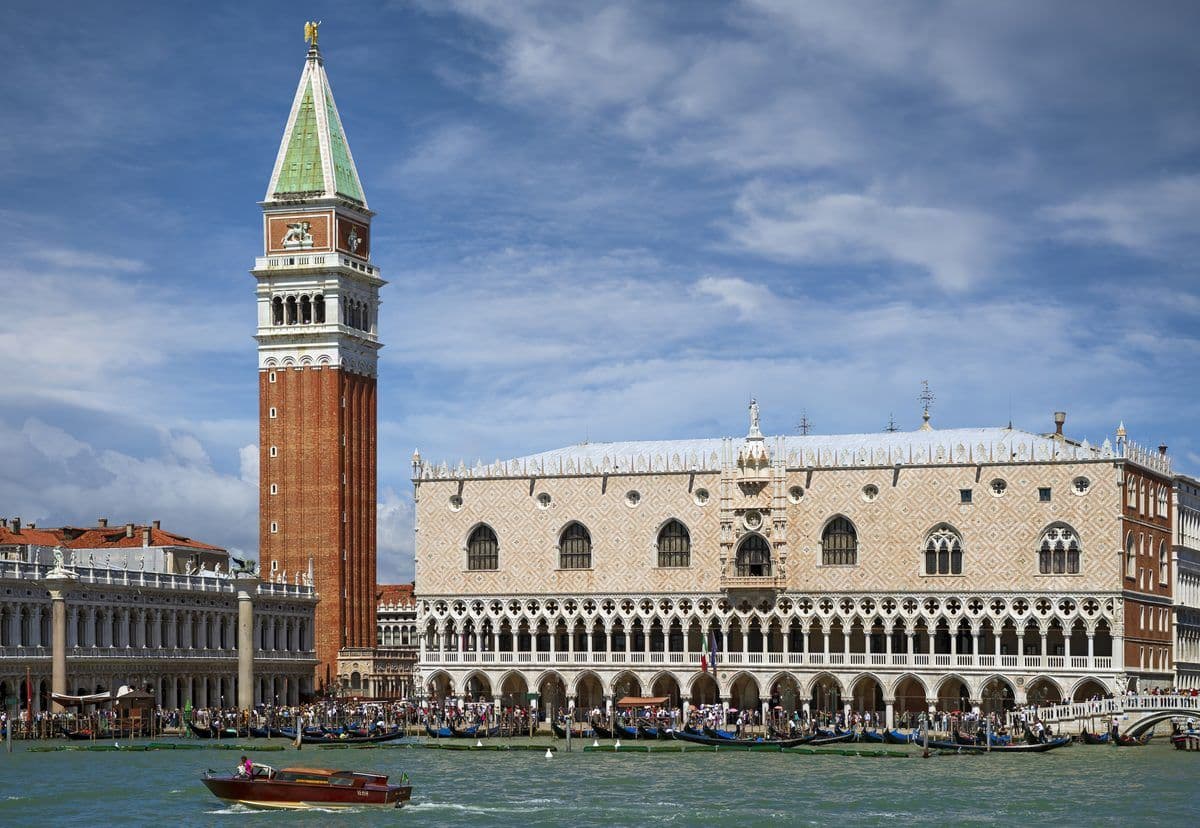
San Giorgio Maggiore's bell tower, for the view back across the water at the Doge's Palace — the classic postcard seen from the other side. It has an elevator, costs around €8 cash only, and carries a fraction of the queue at St Mark's Campanile. The church below is free.

How do you plan a day in Venice when there are no cars?

Assume walking distances are longer than the map suggests — a stop 300 metres away can be ten minutes around a canal — and treat vaporetto legs as fixed-cost hops rather than shortcuts. The practical consequence is fewer stops per day than in a comparable mainland city, clustered by sestiere.

Are there quiet parts of Venice?

Yes, and they start surprisingly close to the crowds. Cannaregio's northern fondamente, the Castello beyond the Arsenale, and the Scala Contarini del Bovolo — a Renaissance spiral staircase in a courtyard between Rialto and St Mark's — are all within the main island and consistently uncrowded. Early morning, before the day boats land, changes the whole city.

Ready when you are

Turn Venice into a day that actually works.

Pick your date, pace and companions. MEVAYA sequences the stops around real opening hours, closed days and walking distances — buy your City Pass for full access.

Plan Venice