Paris city view

Paris

Grand on the boulevards, quiet one street back

France · 40 stops · Métro / RER / bus

What Paris is actually like

The monuments are exactly as advertised; the surprise is how fast the crowds thin when you step off the axis. Paris rewards a day that alternates — one ticketed landmark, one arrondissement to wander. Timed entry is now mandatory at more museums than most visitors expect, so the booking matters as much as the route.

Timed-entry museumsArrondissement walksCafé stops
Plan a day in Paris

The 3 top stops

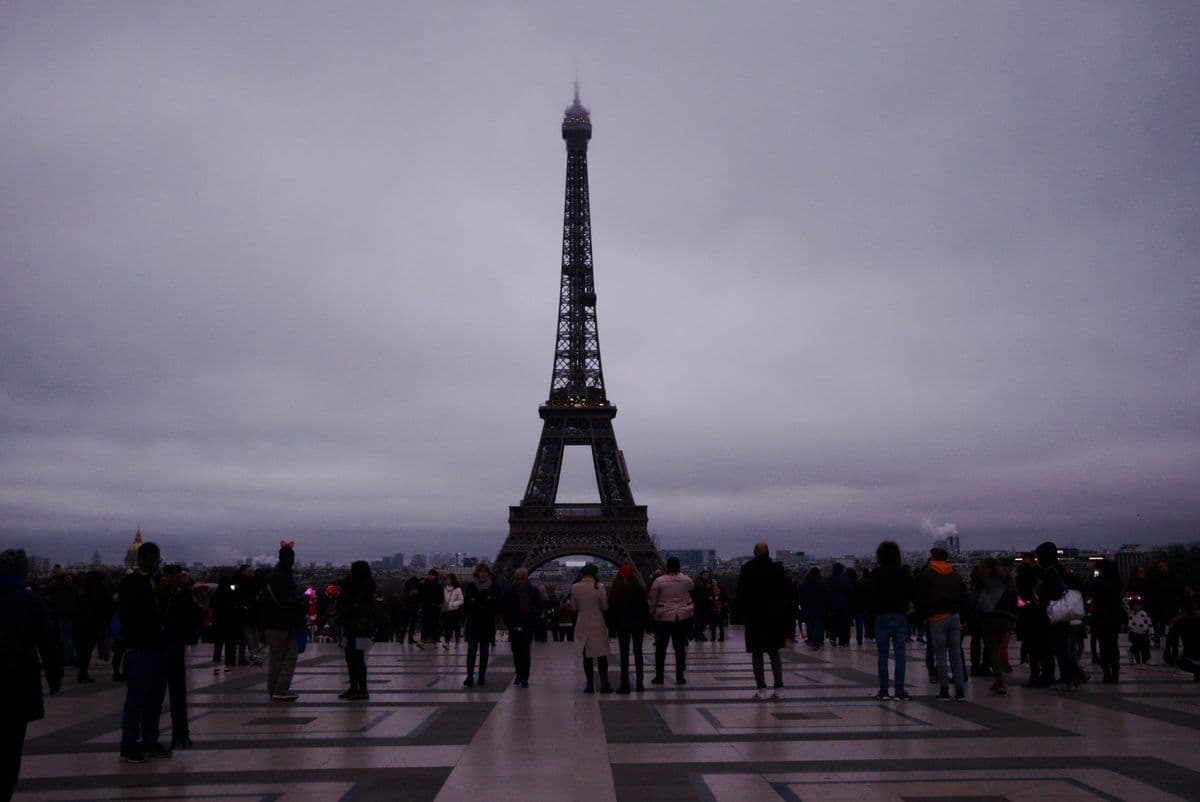
Trocadéro esplanade

The terrace across the river that gives you the Eiffel Tower head-on, whole, with nothing in the way. Free, always open, and the reason every good photograph of the tower is taken from here rather than underneath it.

30 min· FreeTravel caution

Public open-air space — accessible at any time, no ticket

⚠ Worth knowing nearby: The same petition-clipboard and "free gift" bracelet scammers who work the Eiffel Tower crowds are common here too, since it's the classic photo spot for the tower. Don't engage.

Eiffel Tower

Second floor is the one worth having — the view actually frames the city, where the summit mostly shows you haze. Stairs to level two are cheaper, quicker and far less queued than the lifts.

105 minBOOK AHEADTravel caution

Daily 09:30–23:45 (last ascent 22:45)

⚠ Worth knowing nearby: No bag storage on site — large bags or suitcases (over roughly 40x20x55cm) aren't allowed in at all, so don't arrive straight from a train with luggage. The top floor typically closes for about a month each winter (early January into February) for annual maintenance. The area draws petition-clipboard scammers and "free" friendship-bracelet or gold-ring sellers who demand payment once they've tied something to your wrist or placed it in your hand — don't sign, don't accept, keep walking.

♿ Accessibility: Wheelchair accessible up to the 2nd floor via elevator. Reaching the 3rd floor/summit requires climbing 18 steps to a second elevator, so it is not step-free.

Arc de Triomphe

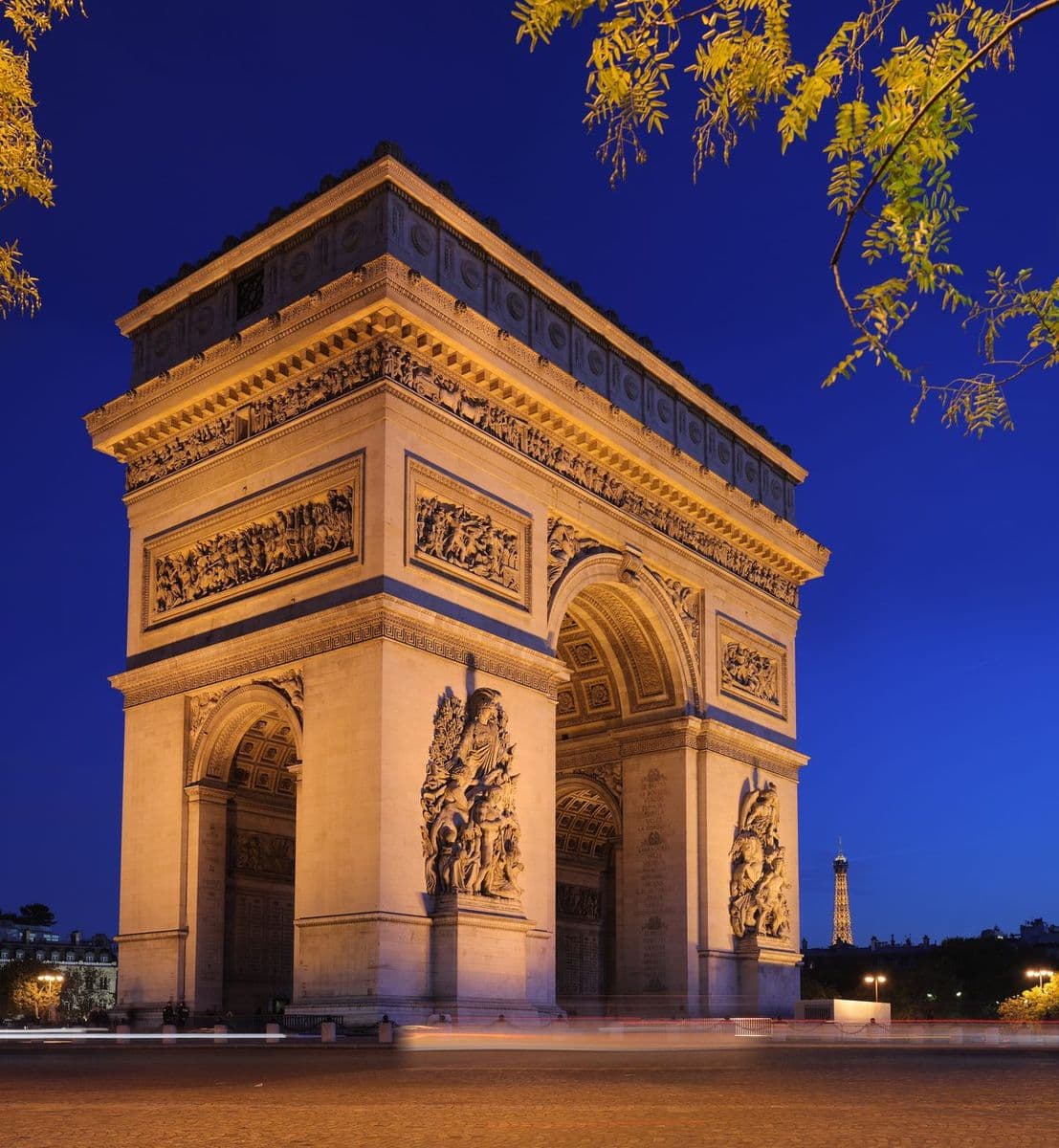
Napoleon’s arch over the world’s most intimidating roundabout. The rooftop is a paid, separate ticket and one of the best views in Paris. Use the underpass to reach it — crossing the traffic on foot is not a thing you do.

45 min

Daily roughly 10:00–23:00 (seasonal, shorter in winter)

♿ Accessibility: NOT wheelchair accessible — entry is by stairs only.

Before you go

Currency
Euro (€). Cards are accepted almost everywhere, including for a €2 coffee. Contactless is standard.
Emergency
112 for anything · 17 police · 18 fire · 15 medical (SAMU). English is understood on 112.
Time zone
CET / CEST (UTC+1, +2 in summer) — same as Germany.
Power
Type C/E sockets, 230V — German plugs fit without an adapter.
Language
French. The single highest-value thing you can do here is say "Bonjour" before anything else — before a question, before an order, every time. Skipping it is read as rudeness, and it changes how you are treated more than fluent French would.
Getting around
The métro reaches everything and a station is rarely more than 500m away. Buy a Navigo Easy card and load carnets of ten, or use contactless directly at the barrier. A day pass only pays off from about five journeys.
Airport transfer
RER B train, Charles de Gaulle to central Paris (Châtelet-Les Halles, Gare du Nord): 35-50 min, every 10-20 min, roughly 5am to midnight. Since 1 January 2026 it's a flat €14 fare (Paris Région ↔ Aéroports), loaded onto a Navigo Easy card or the IDF Mobilités app rather than a paper ticket — and it also covers the return leg to Orly. The old direct Roissybus to Opéra was discontinued on 28 February 2026; if a guide still recommends it, that guide is out of date.
Tipping
Service is included by law — "service compris". Rounding up, or leaving €1–2 per person after a good meal, is a kindness rather than an obligation. Nobody will chase you.
Meal times
Lunch 12:00–14:00 , dinner from 19:30 . Many kitchens genuinely close between those windows — a restaurant serving hot food at 16:30 is usually a tourist one.
Closing days
This catches more visitors than anything else. The Louvre closes Tuesdays. Orsay, Rodin and Carnavalet close Mondays. The Orangerie closes Tuesdays. Many bakeries and bistros also close Sunday or Monday. Check before you build a day around one.
Tap water
Safe and good. Ask for "une carafe d'eau" and it arrives free — you do not have to buy bottled water, whatever the menu implies.
Toilets
Free self-cleaning Sanisettes are dotted across the city and genuinely usable. Department stores and museums you have a ticket for are the other reliable option. Cafés expect a purchase first.
Safety
Paris is safe; the risk is theft, not violence. Phones are snatched from café tables and métro doorways. Keep bags zipped and in front of you around Châtelet, Gare du Nord, Barbès and the Eiffel Tower.

And the quieter ones

The stops that rarely make a top-ten list but consistently make a better day.

  • Sainte-Chapelle

    Fifteen metres of 13th-century stained glass on all sides, and the single most astonishing interior in Paris. Small, so it fills fast — and worth timing for a bright day, because the whole point is light.

  • Père-Lachaise Cemetery

    Forty-four hectares of cobbled avenues and tombs — Chopin, Wilde, Piaf, Morrison. Free, enormous, and the quietest place in eastern Paris. Take a photo of the map at the gate; people genuinely get lost here.

  • Palais Garnier

    The opera house that inspired the Phantom — a grand staircase built for being seen on, and a ceiling painted by Chagall. Self-guided visits run through the day when there is no rehearsal.

  • Canal Saint-Martin

    Iron footbridges, plane trees and locks, with young Paris sitting on the quaysides drinking supermarket wine on any warm evening. No monument, no ticket, and one of the most pleasant hours in the city.

There are 33 more curated stops in Paris.

We don't list them all here — it would read like a phone book. Open the planner and use the stop dropdown to browse every one of the 40 stops with its full detail: hours, closed days, typical visit length, booking lead time and what to know before you go. Mark any of them essential and the route builds around your choice.

Browse all 40 stops

A day MEVAYA would actually plan

One example, for Saturday, October 3

This is genuine planner output — a couple, a balanced pace, fixed defaults — not a hand-written itinerary. Your own dates, pace and interests will produce a different day.

Free to view · no account needed
  1. 1

    09:00

    Sainte-Chapelle

    58 min

  2. 2

    10:11

    Notre-Dame & Île de la Cité

    68 min

  3. 3

    11:34

    Musée de Cluny

    81 min

  4. M

    13:07

    La Pie Noir

    60 min

  5. 5

    14:19

    Panthéon

    67 min

  6. 6

    15:47

    Musée Rodin

    86 min

  7. 7

    17:39

    Canal Saint-Martin

    81 min

Interactive map · OpenStreetMap · stop order

Score 92/100 · 7 stops · built from the city guide — pick your own date and this changes.

Plan your own dates

What to book before you fly

The stops where turning up on the day genuinely doesn't work.

  • Eiffel Tower

    4–8 weeks

    Lift tickets to the second floor and summit are released about 60 days out and the good hours go quickly. Stair tickets to level two are cheaper, cannot sell out the same way, and skip the worst queue.

  • Louvre

    1–3 weeks

    Timed entry is effectively mandatory. Closed Tuesdays. Book on louvre.fr only — the resellers above it in search results charge double.

  • Musée d'Orsay

    1–2 weeks

    Timed slots. Closed Mondays. The Thursday late opening is the calmest slot of the week.

  • Sainte-Chapelle

    1–2 weeks

    Small chapel, shared security queue with the courthouse. A booked slot saves an hour on a busy day.

Worth knowing on the ground

The things that catch people out in Paris specifically.

The scams — all clustered in four places

Paris scams are concentrated around the Eiffel Tower, Sacré-Cœur, the Louvre courtyard and Châtelet. Everywhere else you can relax. The friendship bracelet: on the steps up to Sacré-Cœur, someone takes your wrist and starts knotting a thread before you can react, then demands payment and blocks your way. Keep your hands in your pockets on those steps and do not stop walking. The gold ring: a person "finds" a ring at your feet, offers it to you, then asks for money for their kindness. It is brass. Say nothing and keep going. The petition clipboard: young people ask you to sign for a deaf-and-mute charity. The clipboard occupies your attention and hands while a second person works your bag. There is no charity. Fake plain-clothes police: around Louvre, Châtelet and métro lines 1, 4 and 9, someone flashes a badge and asks to inspect your wallet for counterfeit notes. Real French police in uniform do not do this. Never hand over your wallet; offer to walk to the nearest station. Fake ticket sites: search results for the Louvre, Versailles and Orsay are full of resellers charging double. Book only on the museum's own domain.

Two warning colours, two meanings

Rip-off — you're being overcharged or worked. Overrated — nobody is cheating you, but the reality regularly disappoints.

Toilets

Use museums, larger attractions, stations and cafés as reliable fallback points.

Paris: common questions

Answered from our own September 2026 verification pass, not scraped from listings.

Do you need to book the Musée d'Orsay in advance?

Yes — since March 2026 a timed slot is mandatory for everyone, including Paris Museum Pass holders, because of an entrance-hall renovation running through summer 2028. Walk-up entry no longer works at all. The Orangerie applies the same strict slot rule to the Water Lilies rooms.

Is Notre-Dame open, and do you need a reservation?

It reopened in December 2024 and entry is free. By 2026 the opening-week frenzy has settled: a reservation cuts the wait but is no longer essential. The towers are a separate timed ticket run by the Centre des Monuments Nationaux and are not covered by the free cathedral visit.

When is the Louvre least crowded?

Wednesday and Friday evenings, when it stays open until 21:00 and the tour groups and school parties have cleared. The museum is closed Tuesdays, plus 1 January, 1 May and 25 December.

How many days do you need in Paris?

Three to four for a first visit. The monuments themselves are quick; what takes time is that the good ones need booked slots at fixed hours, which constrains how much you can chain together in a day. A workable rhythm is one ticketed landmark plus one arrondissement to wander, per half-day.

Where do Parisians actually go?

Away from the axis. The Parc des Buttes-Chaumont in the 19th — cliffs, a lake and a temple on a rock — is a genuine local park rather than a sight. The Butte-aux-Cailles in the 13th is a village of cobbled lanes best visited in the evening for dinner rather than as a daytime stop.

Ready when you are

Turn Paris into a day that actually works.

Pick your date, pace and companions. MEVAYA sequences the stops around real opening hours, closed days and walking distances — buy your City Pass for full access.

Plan Paris