
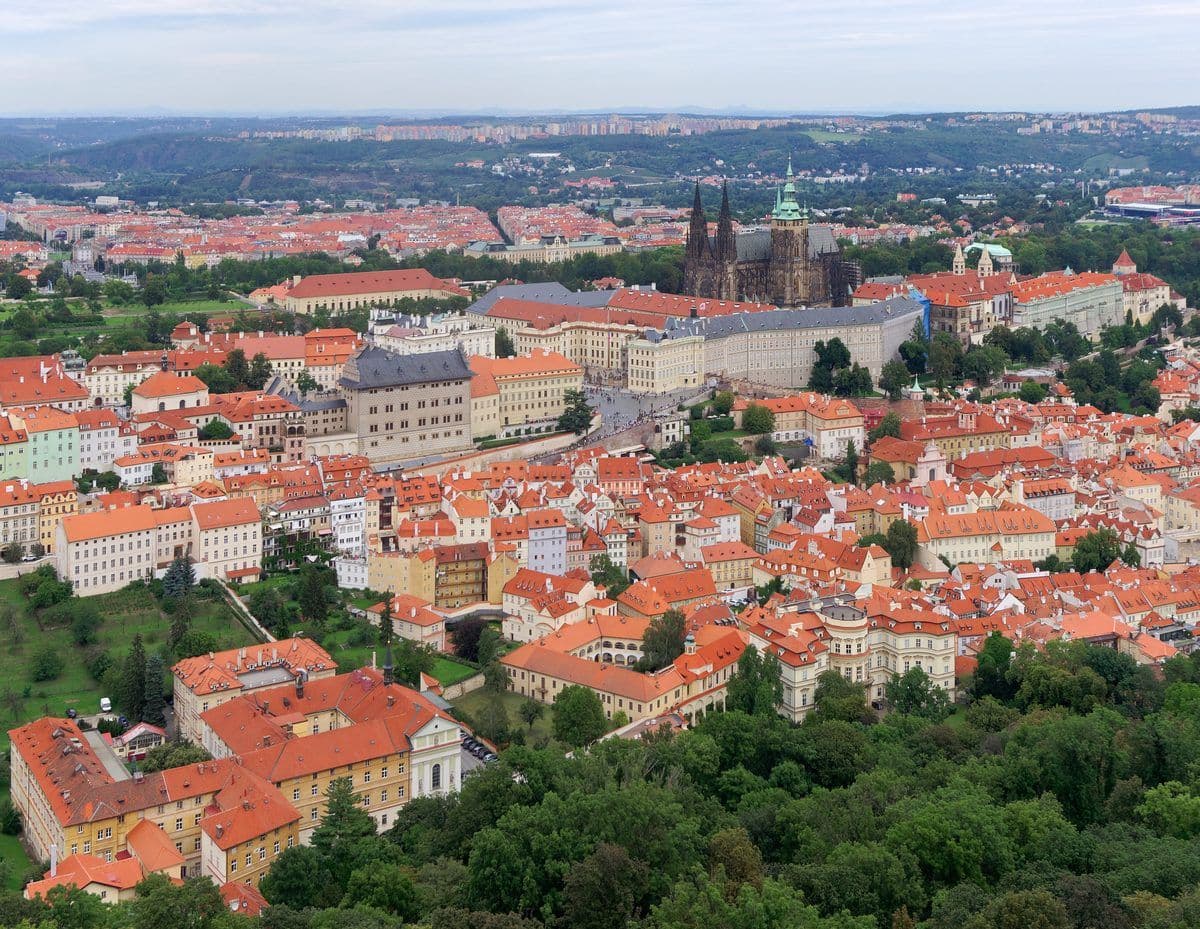
Prague city view

Prague

A skyline that survived the century intact

Czechia · 36 stops · Metro / tram / bus

What Prague is actually like

Prague came through the 20th century with its old town essentially undamaged, which is why the view over the rooftops still looks like a woodcut. The castle side and the old town side are separated by the river and a very crowded bridge — cross early or late, and the same walk becomes a different city.

Castle hillBaroque interiorsBeer-hall evenings
Plan a day in Prague

The 3 top stops

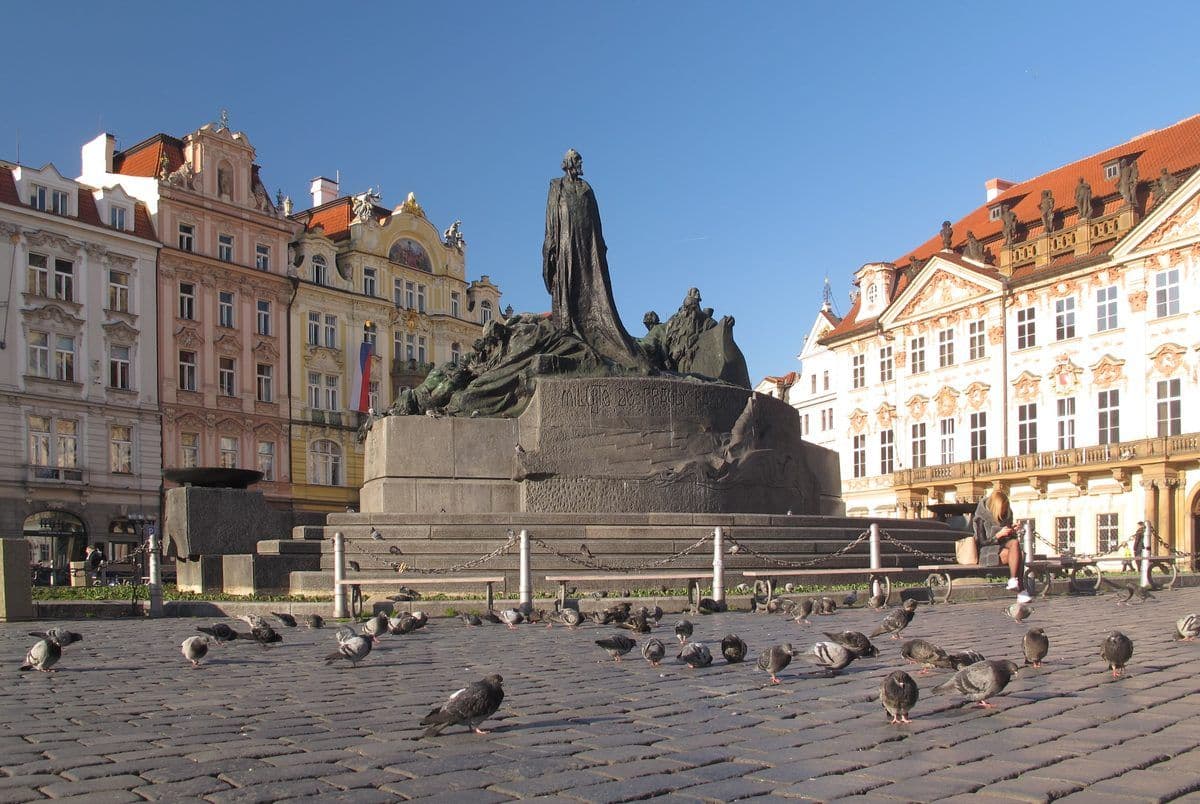
Old Town Square

Gothic spires, baroque façades and the astronomical clock on the town hall wall — a working medieval instrument that tracks the sun, the moon and the zodiac. Free and open at any hour.

40 min· FreeTravel caution

Public open-air space — accessible at any time, no ticket

⚠ Worth knowing nearby: The clock’s hourly show is genuinely underwhelming — two small doors open, twelve figures pass, a skeleton rings a bell, and it is over in 45 seconds. Hundreds of people wait twenty minutes for it. See it once if you happen to be there; the clock face itself, which people ignore, is the remarkable part. Separately: restaurants right on the square have a history of undisclosed cover charges, a "bread you didn't order" fee, or a bill that doesn't match the menu — check both before paying. The currency-exchange booth on the square's corner has also been publicly called out for rates far worse than its advertised "0% commission" suggests; use a bank or an ATM instead.

♿ Accessibility: The terrain here is flat, but historical paving in parts of the square and nearby streets, plus a few un-ramped curbs near the Old Town Hall, can be difficult to roll over.
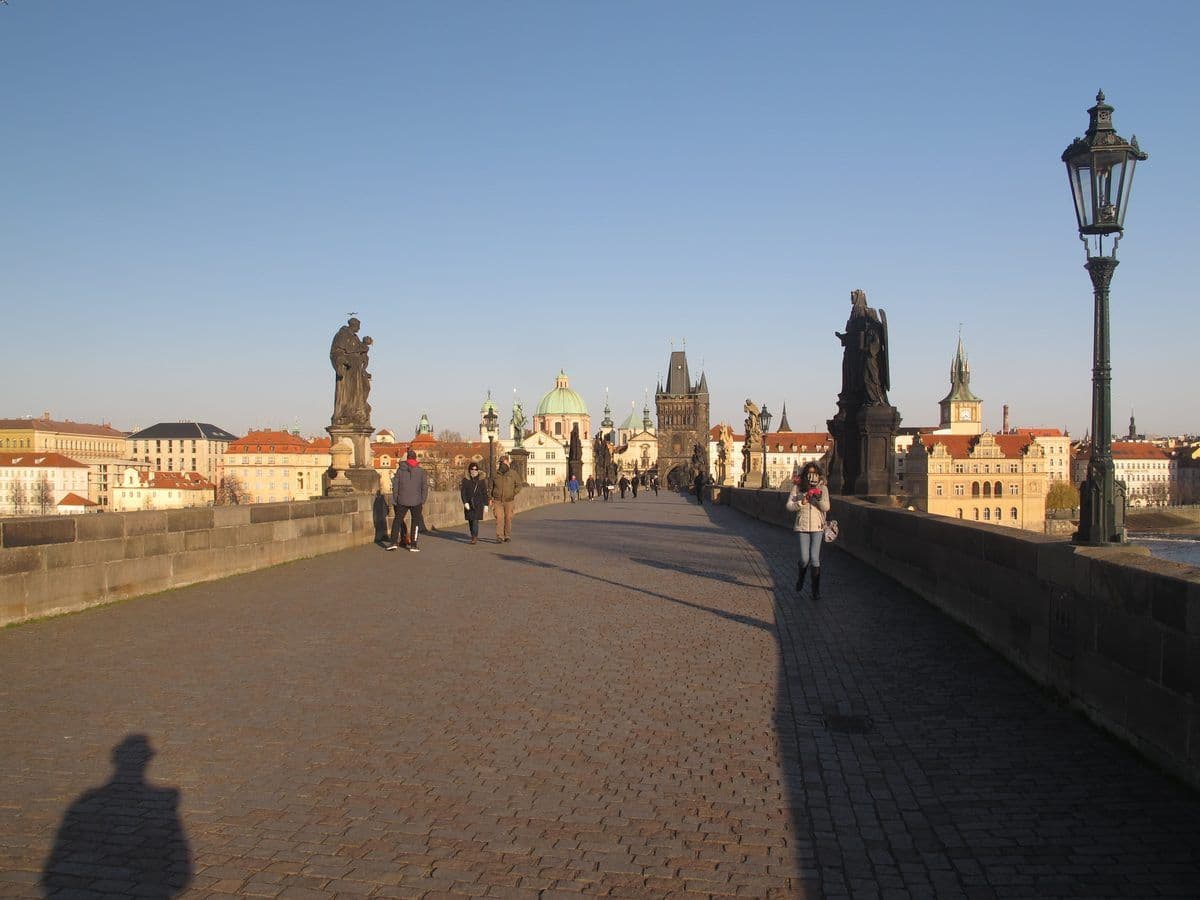
Charles Bridge

Six hundred years old, thirty baroque statues, and the Castle rising at the far end. Free, always open — and a completely different experience depending on the hour you choose.

40 min· FreeTravel caution

Public open-air space — accessible at any time, no ticket

⚠ Worth knowing nearby: Portrait and caricature sellers along the bridge, plus buskers with a donation box, will happily overcharge a tourist who doesn't agree a price first — settle the cost before they start, or just enjoy the bridge and skip the souvenir.

♿ Accessibility: The bridge surface itself is manageable, but the approach from Křižovnické Square has a short, steep slope — approaching from the Lesser Town (Malá Strana) side is easier.

Prague Castle

The largest ancient castle complex in the world, and still the seat of the president. The courtyards and grounds are free to walk; the cathedral, Old Royal Palace and Golden Lane are inside a ticketed circuit.

110 minBOOK AHEAD

Grounds daily 06:00–22:00, free. Historic buildings (cathedral, palace, Golden Lane): daily 09:00–17:00 Apr–Oct, 09:00–16:00 Nov–Mar

♿ Accessibility: Wheelchair-accessible paths are marked on castle information-centre maps; ramps and lifts connect most of the grounds.

Before you go

Currency
Czech koruna (CZK), not euro . Places advertising prices in euro are almost always charging a poor rate. Roughly 25 CZK to the euro — learn that number.
Emergency
112 for everything · 158 state police · 156 city police.
Time zone
CET / CEST (UTC+1, +2 in summer) — same as Germany.
Power
Type C/E sockets, 230V — German plugs fit.
Language
Czech. English is widely spoken in the centre. "Dobrý den" on entering and "děkuji" on leaving are noticed and appreciated.
Getting around
Trams, metro and buses share one ticket — 30 or 90 minutes, bought in the PID Lítačka app or at machines. Validate it in the yellow box as you board; inspectors are frequent and fines are on the spot.
Airport transfer
Trolleybus 59 — which replaced the long-running Bus 119 in 2024, so older guides and even some current ones still get this wrong — runs from the airport to Nádraží Veleslavín metro station (Line A) in about 15 minutes. From there the metro reaches the historic centre in another 15-20 minutes. A single 90-minute PID ticket covers the whole journey including the metro transfer, no separate ticket needed.
Tipping
Round up or add about 10% for good service. Say the total you want to pay as you hand over the money.
Meal times
Prague eats early: lunch 11:30–14:00 , dinner from 18:00 . Kitchens in smaller pubs stop around 22:00.
Beer
Cheaper than water in most pubs, and taken seriously — order by size (0.5l is standard) and expect a thick head, which is correct here, not a short measure. A fresh beer arrives automatically until you put a coaster on the glass.
Tap water
Excellent and safe. Restaurants may charge for a glass, but asking is normal.
Toilets
Mostly paid, around 20 CZK, including at metro stations. Free and reliable: shopping centres, museums you have a ticket for, and the Prague Castle complex.
Safety
Very safe by European standards. The risks are financial rather than physical: exchange booths, taxis, and the strip clubs at the bottom of Wenceslas Square.

And the quieter ones

The stops that rarely make a top-ten list but consistently make a better day.

  • Vyšehrad

    The other castle — a hilltop fortress south of the centre with a neo-Gothic basilica, ramparts you can walk, and the cemetery where Dvořák and Mucha are buried. Free, green, and used mostly by locals.

  • Kampa Island

    A small island under Charles Bridge with a mill wheel, a park along the water and John Lennon’s graffiti wall around the corner. Two minutes off the bridge and a fraction of the people.

  • Strahov Monastery Library

    Two baroque halls of astonishing beauty — the Theological and Philosophical libraries, ceilings painted end to end, globes and cabinets of curiosities. You view them from the doorway, which is the one catch.

  • Trade Fair Palace (National Gallery)

    A functionalist 1920s building holding the modern and contemporary collection — Czech avant-garde, plus a Picasso and Klimt room. Enormous, superb, and reliably almost empty.

There are 29 more curated stops in Prague.

We don't list them all here — it would read like a phone book. Open the planner and use the stop dropdown to browse every one of the 36 stops with its full detail: hours, closed days, typical visit length, booking lead time and what to know before you go. Mark any of them essential and the route builds around your choice.

Browse all 36 stops

A day MEVAYA would actually plan

One example, for Saturday, October 3

This is genuine planner output — a couple, a balanced pace, fixed defaults — not a hand-written itinerary. Your own dates, pace and interests will produce a different day.

Free to view · no account needed
  1. 1

    09:00

    Kampa Island

    52 min

  2. 2

    10:04

    Charles Bridge

    53 min

  3. 3

    11:15

    Strahov Monastery Library

    69 min

  4. M

    12:32

    Strahov Monastery Brewery

    60 min

  5. 5

    13:50

    Kunsthalle Praha

    90 min

  6. 6

    15:38

    Mucha Museum

    67 min

  7. 7

    16:56

    Wenceslas Square

    44 min

  8. 8

    18:04

    Dancing House

    29 min

Interactive map · OpenStreetMap · stop order

Score 97/100 · 8 stops · built from the city guide — pick your own date and this changes.

Plan your own dates

What to book before you fly

The stops where turning up on the day genuinely doesn't work.

  • Prague Castle circuit

    3–7 days

    The grounds are free and open from 06:00. The ticket covers St Vitus, the Old Royal Palace, St George's and Golden Lane. Booking ahead mainly saves you the ticket-office queue.

  • Jewish Quarter

    1 week

    One combined ticket for the synagogues and cemetery. Closed Saturdays and on Jewish holidays, which catches a lot of people.

  • Popular restaurants

    2–7 days

    The good Czech places are small and locals book them. U Kroka and the tasting side of Czech Slovak genuinely need a reservation.

  • Classical concerts

    1–2 weeks

    Buy from the venue — the Rudolfinum, Municipal House, the National Theatre. The people selling concert tickets in the street outside are a different product entirely.

Worth knowing on the ground

The things that catch people out in Prague specifically.

The money scams — the most organised in this series

Street money changers: someone offers a great rate for cash on the street, usually near the Old Town or Wenceslas Square, and hands you a stack of banknotes that turn out to be worthless — often old Hungarian forint or withdrawn Belarusian notes. Never change money with a person. Ever. "0% commission" booths: the commission is buried in an atrocious rate instead. The exchange rate boards are frequently designed so the terrible tourist rate is the large number and the real one is in small print underneath. Use a bank or a proper ATM — Česká spořitelna, ČSOB, Komerční banka. ATM dynamic conversion: Euronet machines in tourist areas offer to "convert to your home currency". Always decline and let your own bank convert — the machine's rate is several percent worse. Two menus: a Czech-priced menu and a tourist one, in restaurants around the Old Town Square. Also watch for a 15% "service charge" printed small, plus a card terminal suggesting a 20% tip on top of it. Check the bill line by line. Taxis flagged on the street: particularly at the main station and Wenceslas Square. Use Bolt or Liftago , where the price is fixed before you get in. Fake plain-clothes police asking to check your cash for counterfeits, usually right after a street changer approached you. The two work together. Never hand over your wallet.

Two warning colours, two meanings

Rip-off — you're being overcharged or worked. Overrated — nobody is cheating you, but the reality regularly disappoints.

Toilets

Use museums, larger attractions, stations and cafés as reliable fallback points.

Prague: common questions

Answered from our own September 2026 verification pass, not scraped from listings.

Is the Petřín funicular running?

It has been out of service since September 2024 for slope-stabilisation work, with reopening targeted for summer 2026 — check its current status before counting on it, because walking up Petřín hill is a genuine climb rather than a stroll. Buy lookout-tower tickets only through Prague City Tourism's own channels; third-party resellers are not valid.

When is the Jewish Quarter closed?

Every Saturday, year-round, plus Jewish holidays — which in 2026 include 13 September (Rosh Hashanah) and 21 September (Yom Kippur). The Old-New Synagogue runs on a separate ticket and closes about an hour before Shabbat begins on Fridays.

How do you avoid the crowds on Charles Bridge?

Cross early or late. The bridge is genuinely packed from mid-morning to early evening, and the same walk at 07:00 or after 21:00 is a completely different experience. The castle side and the old town side are separated by that bridge, so the timing shapes the whole day's routing.

Is Prague Castle free to enter?

The courtyards and grounds are free and open 06:00–22:00 daily. The paid circuit covers St Vitus Cathedral's interior, the Old Royal Palace, St George's Basilica and Golden Lane. St Vitus itself runs 09:00–17:00 in summer, shorter in winter, and opens later on Sundays.

What is the Municipal House and why visit it?

Prague's most lavish Art Nouveau building, decorated in 1912 by the leading Czech artists of the day — Mucha designed the Mayor's Hall single-handed. Czechoslovak independence was declared here in 1918. The building and its café are free to walk into; the decorated halls need a booked guided tour running on a set schedule.

Ready when you are

Turn Prague into a day that actually works.

Pick your date, pace and companions. MEVAYA sequences the stops around real opening hours, closed days and walking distances — buy your City Pass for full access.

Plan Prague