Istanbul city view

Istanbul

Two continents, one skyline, endless layers

Türkiye · 40 stops · Metro / tram / ferry

What Istanbul is actually like

Byzantine capital, Ottoman capital, and a working megacity of sixteen million, all on the same peninsula. The headline sights are active mosques with daily prayer closures and a long Friday midday gap — the single most useful thing to plan around here, and the reason a good day sequences the old city rather than just listing it.

Sultanahmet coreBosphorus crossingsBazaar quarters
Plan a day in Istanbul

The 3 top stops

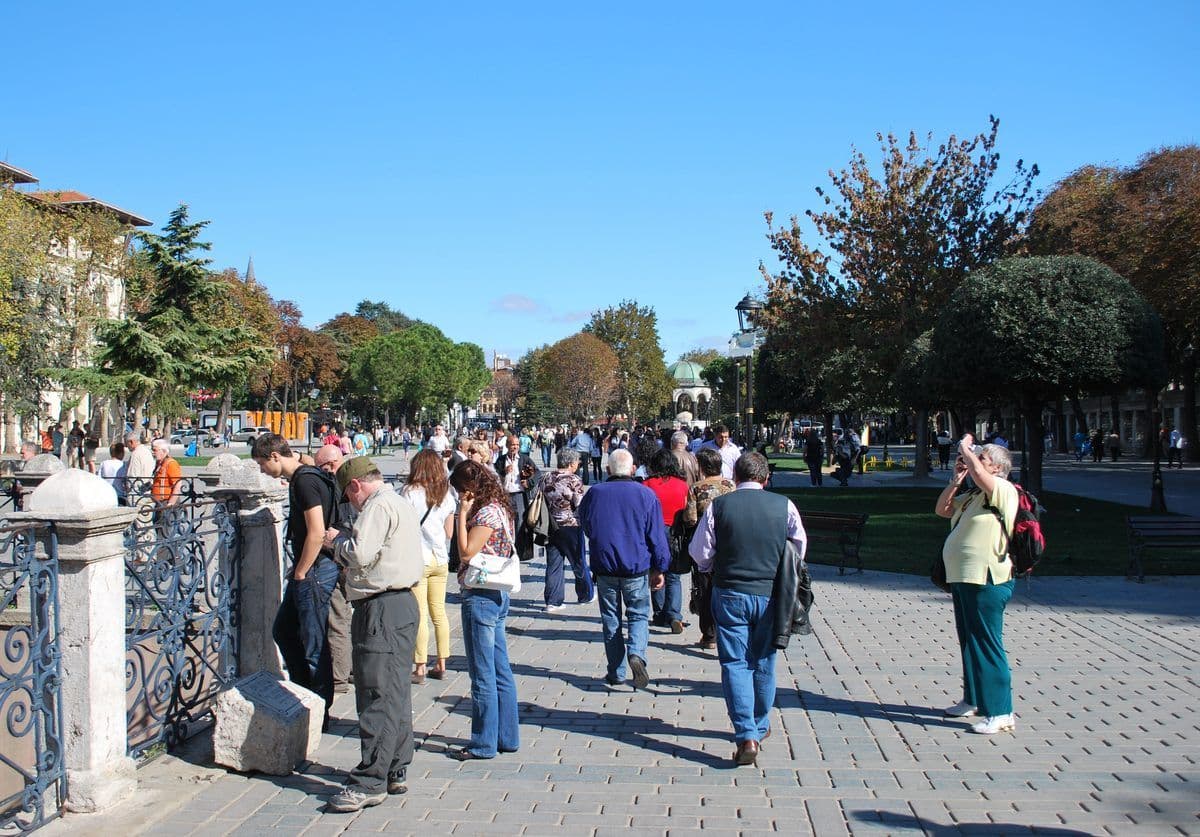
Sultanahmet Square & the Hippodrome

The old Roman chariot-racing ground, now a long open square with an Egyptian obelisk in the middle and the two great mosques at either end. Free, always open, and the right place to get your bearings before anything else.

35 min· FreeTravel caution

Public open-air space — accessible at any time, no ticket

⚠ Worth knowing nearby: Around here, a stranger who "accidentally" drops a shoe-shine brush and offers a free polish as thanks will demand payment afterward, and "helpful locals" who strike up conversation often steer you toward a family carpet shop for tea and a high-pressure sales pitch. Politely decline both; neither is really free.

♿ Accessibility: The square itself is flat and accessible; it is on the route of Istanbul's accessible tram line.

Hagia Sophia

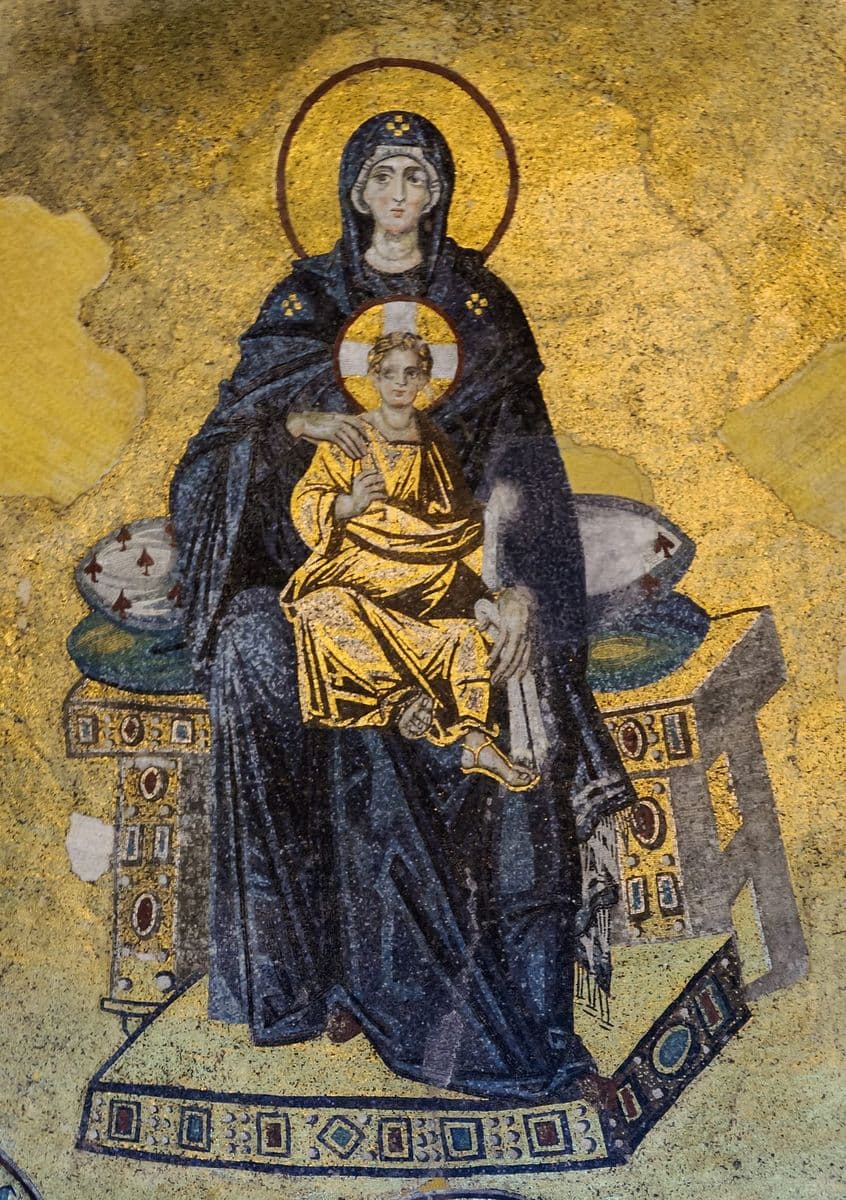
Cathedral for 900 years, mosque for 500, museum for 80, mosque again since 2020. Nothing else on earth carries that much layered history in one room. Upper gallery access is separate and ticketed for visitors.

80 minBOOK AHEAD

Daily 09:00–19:00 (summer to ~19:00–19:30, winter to 17:00); ground floor is an active mosque

♿ Accessibility: Wheelchair accessible via ramps, though the entrance has some small single steps — manageable for manual wheelchairs, harder for electric ones. Has a dedicated accessible toilet.

Blue Mosque (Sultanahmet Camii)

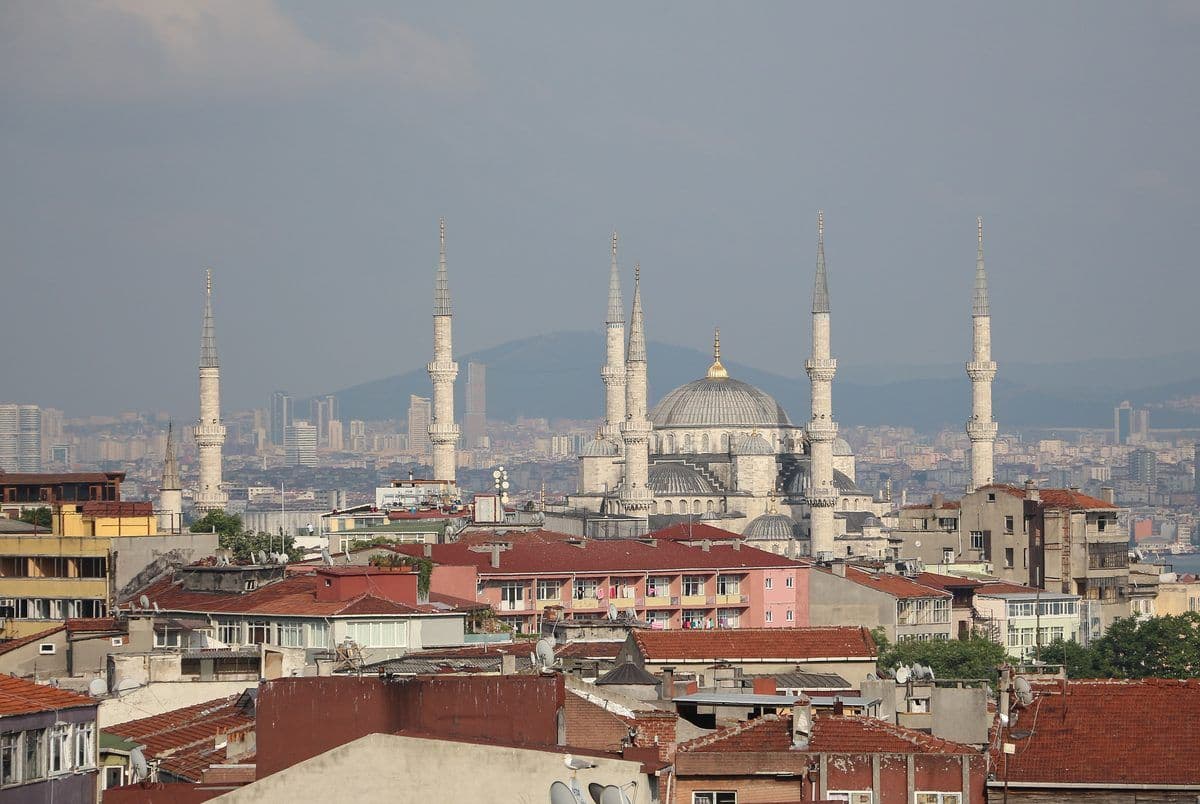
Six minarets and more than 20,000 İznik tiles inside, which is where the nickname comes from. Still an active mosque, and free to enter outside prayer times.

45 min· Free

Open daily roughly 08:30 until an hour before dusk; free entry

♿ Accessibility: Wheelchair accessible; viewing the interior from a wheelchair is not a problem.

Before you go

Currency
Turkish lira (TL). Never change money on the street — use a bank, an official exchange office with displayed rates, or an ATM. Cards are widely accepted; small stalls are cash.
Emergency
112 covers police, fire and ambulance. There is also a dedicated tourism police around Sultanahmet, open 24/7.
Time zone
TRT (UTC+3) — two hours ahead of Germany, no daylight saving.
Power
Type C/F sockets, 230V — same as most of Europe, no adapter needed for German plugs.
Language
Turkish. English is common in Sultanahmet, Beyoğlu and Kadıköy, thinner elsewhere. A translation app earns its keep here.
Getting around
Buy an İstanbulkart at any airport or metro station — it works on metro, tram, bus, funicular and the ferries, and is far cheaper than single tickets. It can be shared between travellers. For the historic sights specifically, the T1 tram is the one to know — it runs straight through Sultanahmet and is the most direct way between the major mosques and Topkapı without a metro transfer. Sultanahmet, Beşiktaş and Eminönü sit close enough to each other to walk between on a clear day. And don't treat the ferries as purely functional: crossing between the European and Asian sides by boat is one of the better views in the city, not just a way to avoid traffic.
Airport transfer
This is the one genuinely complicated airport connection in this whole guide. The M11 metro reaches Gayrettepe in about 35-40 minutes, but Sultanahmet needs a further transfer — either M2 to Vezneciler then the T1 tram, or Marmaray from Yenikapı — and either route runs 60-100 minutes total with two to three changes. The Havaist shuttle bus is slower to similar than the metro route in practice but needs no transfers with luggage, which is why most visitors heading straight to the old city take it instead, despite the higher fare. Given how many changes that route needs, a taxi is a genuinely reasonable alternative here — metered, roughly €20-40 to Sultanahmet depending on traffic and time of day, from the official rank outside arrivals. Meter disputes are a known enough issue that it's worth confirming the driver has started the meter before setting off. For getting around once you're in the city rather than arriving, a dolmuş — a shared minibus that runs a fixed route and leaves when full rather than to a timetable — is often the fastest way to cover a stretch the metro doesn't reach directly, and it's cash-only rather than İstanbulkart.
Tipping
Not obligatory, but normal and appreciated. Around 10% in restaurants, always in cash and in lira , even when you pay the bill by card.
Meal times
Breakfast is a long, serious meal here — build a morning around it once. Lunch 12:00–15:00, dinner from about 19:30.
Mosques
Shoulders and knees covered; women cover their hair (scarves are lent at the door). Shoes off. Closed to visitors around the five daily prayers and for longer at Friday midday.
Toilets
Mostly paid, a few lira. Reliably free: shopping centres, and any museum you've already paid to enter. Mosque complexes have ablution facilities but not always public toilets.
Two continents
Crossing to the Asian side by ferry takes about 20 minutes and costs the same as a bus ride. It is the single best-value thing you can do here.
Ramadan
Dates move each year. Restaurants stay open for visitors, but mosque visiting hours tighten considerably and evenings get very busy. Worth checking before you book.

And the quieter ones

The stops that rarely make a top-ten list but consistently make a better day.

  • Süleymaniye Mosque

    Mimar Sinan's masterpiece on the third hill, with a terrace looking down over the Golden Horn. Bigger, calmer and — most visitors agree afterwards — more moving than the Blue Mosque.

  • Balat & Fener

    The old Jewish and Greek quarters on the Golden Horn — steep lanes of painted houses, antique shops and cafés. The most photographed non-monument in the city, and still largely residential.

  • Bosphorus ferry to Kadıköy

    The public commuter ferry across to the Asian side, for the price of a metro ride. You get the same skyline the expensive cruises sell, with tea and seagulls and actual Istanbulites going home.

  • Istanbul Archaeology Museums

    Three buildings inside the Topkapı grounds holding the Alexander Sarcophagus, the Treaty of Kadesh and Ottoman tilework. It sits beside the busiest sight in the country and is reliably half-empty.

There are 33 more curated stops in Istanbul.

We don't list them all here — it would read like a phone book. Open the planner and use the stop dropdown to browse every one of the 40 stops with its full detail: hours, closed days, typical visit length, booking lead time and what to know before you go. Mark any of them essential and the route builds around your choice.

Browse all 40 stops

A day MEVAYA would actually plan

One example, for Saturday, October 3

This is genuine planner output — a couple, a balanced pace, fixed defaults — not a hand-written itinerary. Your own dates, pace and interests will produce a different day.

Free to view · no account needed
  1. 1

    09:00

    Bosphorus ferry to Kadıköy

    58 min

  2. 2

    10:19

    Grand Bazaar

    92 min

  3. 3

    12:09

    Süleymaniye Mosque

    63 min

  4. M

    13:21

    Yeditepe Süleymaniye Cafe & Restaurant

    60 min

  5. 5

    14:40

    Istanbul Modern

    90 min

  6. 6

    16:31

    Little Hagia Sophia (Küçük Ayasofya)

    35 min

  7. 7

    17:18

    Blue Mosque (Sultanahmet Camii)

    52 min

  8. 8

    18:19

    Sultanahmet Square & the Hippodrome

    40 min

Interactive map · OpenStreetMap · stop order

Score 93/100 · 8 stops · built from the city guide — pick your own date and this changes.

Plan your own dates

What to book before you fly

The stops where turning up on the day genuinely doesn't work.

  • Hagia Sophia (upper gallery)

    1–2 weeks

    Visitor access to the gallery is ticketed and timed. The ground floor remains an active mosque and free, but has its own queue.

  • Topkapı Palace + Harem

    1–2 weeks

    The Harem is a separate ticket and the part most visitors say justified the trip. Queues build sharply after 10:30.

  • Basilica Cistern

    3–7 days

    Timed entry; the evening slots are both calmer and better lit.

  • Dolmabahçe Palace

    — (no online sales)

    Tickets are sold at the gate only. There is no advance booking, so arrive early — busy days genuinely sell out.

Worth knowing on the ground

The things that catch people out in Istanbul specifically.

The scams — this is the section that saves you money

The shoe-shine drop: a shiner walks past and "accidentally" drops his brush. You pick it up, he insists on shining your shoes in gratitude, then demands a large fee. Just keep walking. The carpet pipeline: a friendly stranger near Sultanahmet asks where you're from, offers to show you a tea house, and you end up in a relative's carpet shop for a choreographed hour where the price falls from €2,000 to €400. The carpets are often real; the pressure is the product. Accepting tea obliges you to nothing. The bar invitation: a well-dressed man invites you for a drink, you end up in a bar you didn't choose, and the bill arrives at an impossible number with staff blocking the door. This is the most dangerous one in the city. Never go to a bar chosen by a stranger. Taxi meters: drivers switching to the night tariff during the day, or taking the coastal road instead of the motorway from the airport. Use BiTaksi , Uber or İstanbulkart on public transport , and follow the route on your phone. The "free" nuts: snacks arrive at your table unordered and appear on the bill. Documented repeatedly at a couple of Kadıköy bars. Ask before anything you didn't order is put down.

Two warning colours, two meanings

Rip-off — you're being overcharged or worked. Overrated — nobody is cheating you, but the reality regularly disappoints.

Toilets

Use museums, larger attractions, stations and cafés as reliable fallback points.

Istanbul: common questions

Answered from our own September 2026 verification pass, not scraped from listings.

Can you visit Hagia Sophia and the Blue Mosque on a Friday?

Yes, but not at midday. Both are active mosques that close to visitors around the five daily prayers, and Friday's congregational prayer creates a much longer gap — roughly 12:30 to 14:30 at Hagia Sophia, and most of the morning until about 14:30 at the Blue Mosque, the largest single closure of any Sultanahmet site. Visit early, or give the midday slot to Topkapı Palace or the Basilica Cistern instead.

Which day is Topkapı Palace closed?

Tuesday. Dolmabahçe Palace closes Mondays. The Archaeology Museums, by contrast, are open every day — some guides wrongly list a Monday closure for them.

Is the Grand Bazaar open on Sundays?

No, the Grand Bazaar closes Sundays. The Spice Bazaar does not — it has traded seven days a week since 2009, which makes it the better Sunday option of the two.

How much time do you need for Sultanahmet?

A full day covers Hagia Sophia, the Blue Mosque, Topkapı and the Basilica Cistern without rushing, provided you sequence around prayer closures. Two days lets you add the Archaeology Museums and Süleymaniye at a civil pace. The sites are within a ten-minute walk of each other, so time goes on queues and closures rather than transit.

What should you wear to visit Istanbul's mosques?

Shoulders and knees covered for everyone; women need a headscarf, and shoes come off at the door. Most major mosques lend scarves and provide bags for shoes at no cost. This applies at Hagia Sophia and Chora too, both of which returned to active worship.

Ready when you are

Turn Istanbul into a day that actually works.

Pick your date, pace and companions. MEVAYA sequences the stops around real opening hours, closed days and walking distances — buy your City Pass for full access.

Plan Istanbul