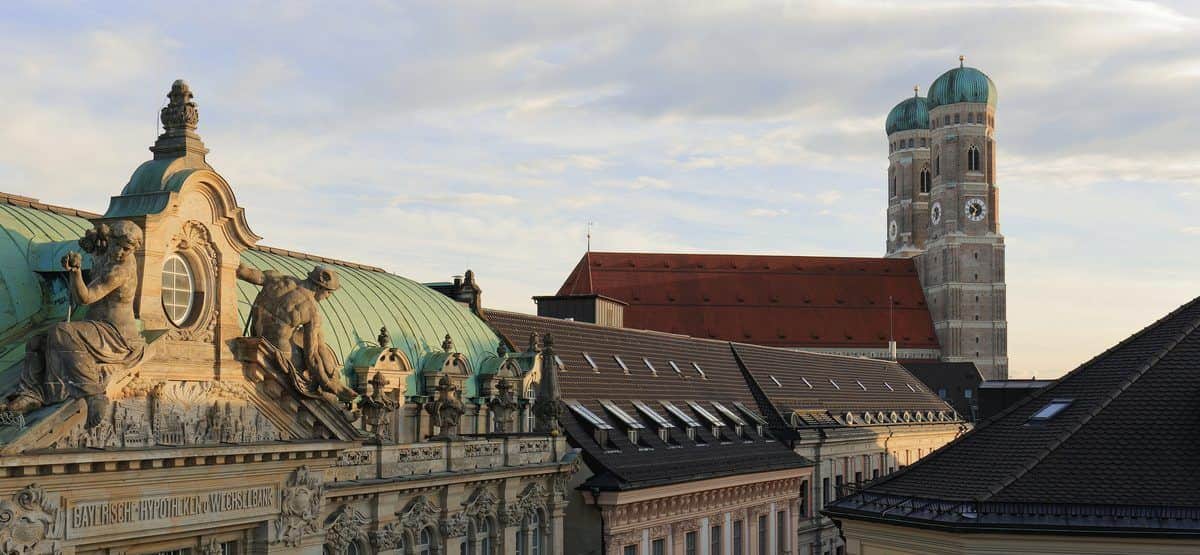
Munich city view

Munich Travel Guide & Trip Planner

Alpine ease with a capital's museums

Germany · 34 stops · MVV / U-Bahn / S-Bahn

What Munich is actually like

Munich is the least hurried of the big German cities — a compact old town, an English Garden bigger than Central Park with surfers in the middle of it, and beer gardens that function as public living rooms. The Wittelsbach palaces bookend it, and the Alps are close enough to change the light.

How we check the hours behind this route

Beer gardensRoyal palacesEnglischer Garten
Plan a day in Munich

The 3 top stops

Ad link · we may earn a commission — the price stays the same for you

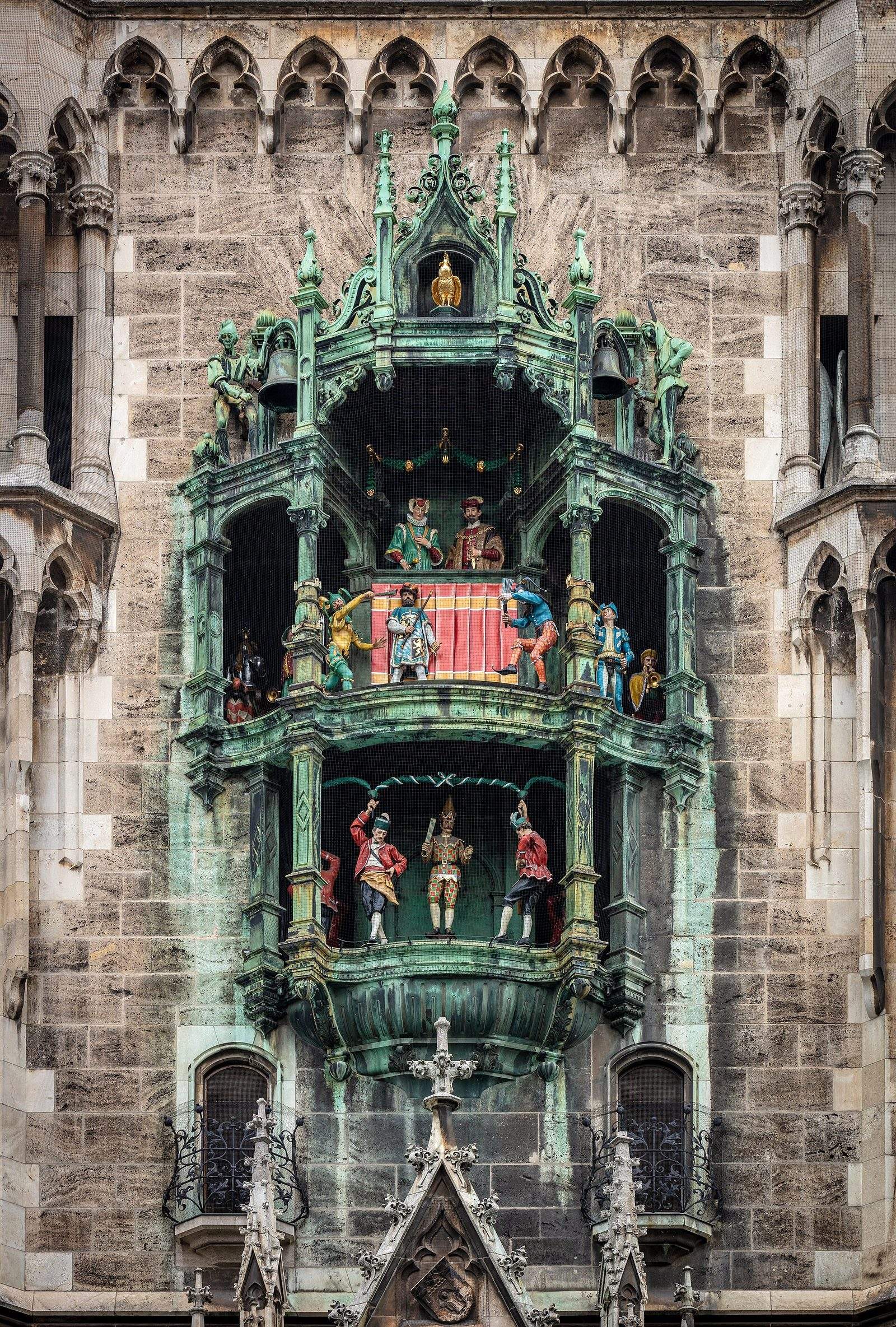
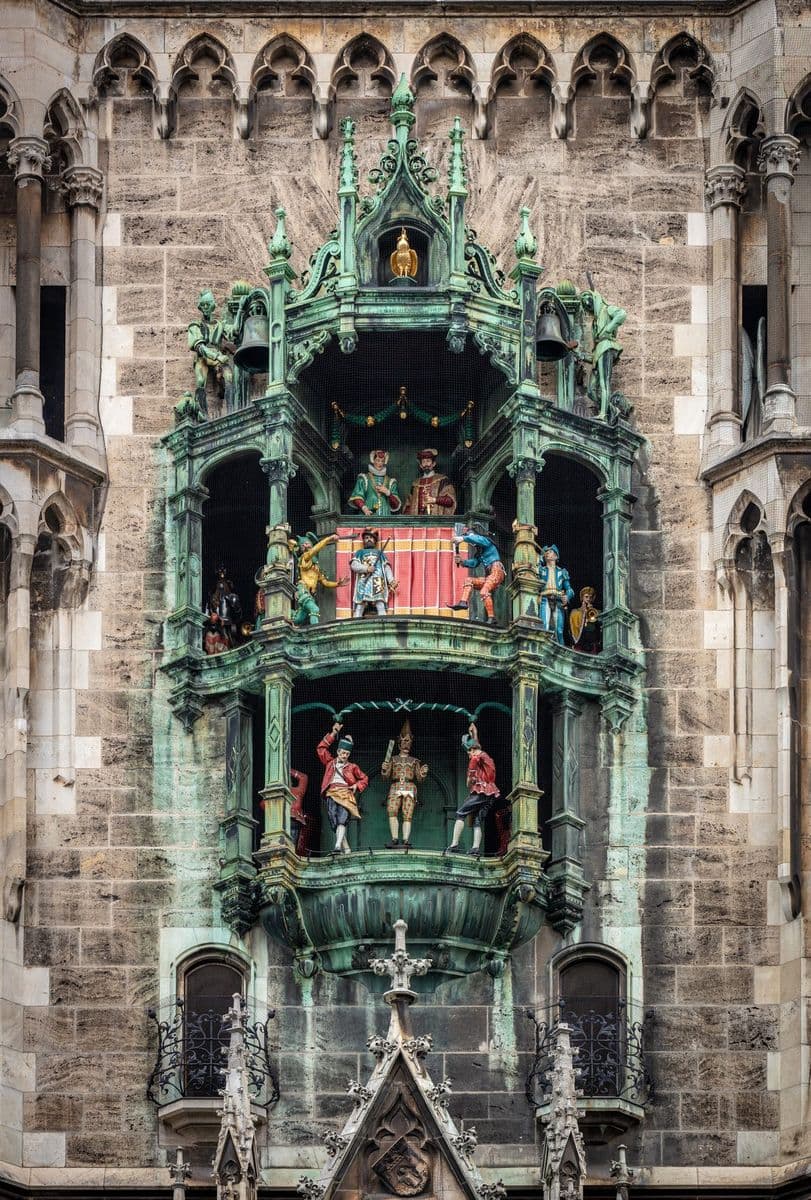
Close-up of the Glockenspiel's painted figures on the New Town Hall at Marienplatz

Marienplatz & the Glockenspiel

The central square, with the neo-Gothic New Town Hall filling one side. The Glockenspiel figures turn at 11:00 and 12:00 (and 17:00 in summer), and the tower lift gives a rooftop view for a few euros.

≈ 40 min· Free

Public open-air space — accessible at any time, no ticket

♿ Accessibility: The square is flat and accessible; the New Town Hall tower is reachable by elevator.

Frauenkirche

Frauenkirche

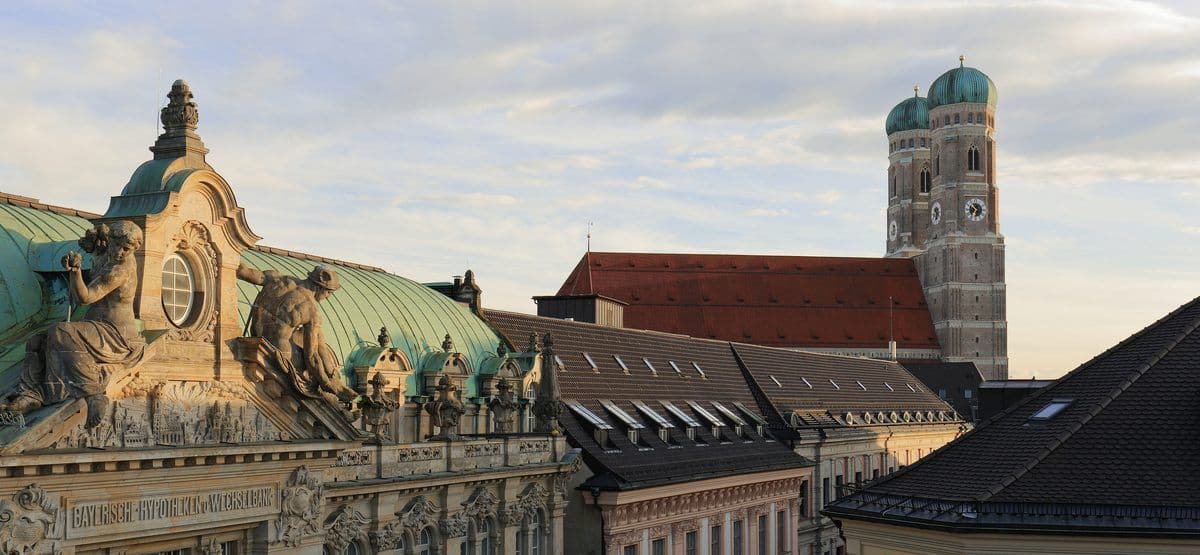
The brick cathedral with two domed towers that the city has banned any building from rising above. Free to enter, and the "Devil’s Footprint" in the entrance floor comes with a good story.

≈ 35 min· Free

Church daily 08:00–20:00, free. South tower Mon–Sat 10:00–17:00, Sun/holidays 11:30–17:00, last ascent 16:30 (€7.50)

Last verified: 25 Sept 2026Primary source: muenchen.de (official city portal) — FrauenkircheMEVAYA dataset: Munich, 34 stops

♿ Accessibility: The nave is step-free and accessible. Only one of the two towers is open to visitors, via elevator to a viewing platform.

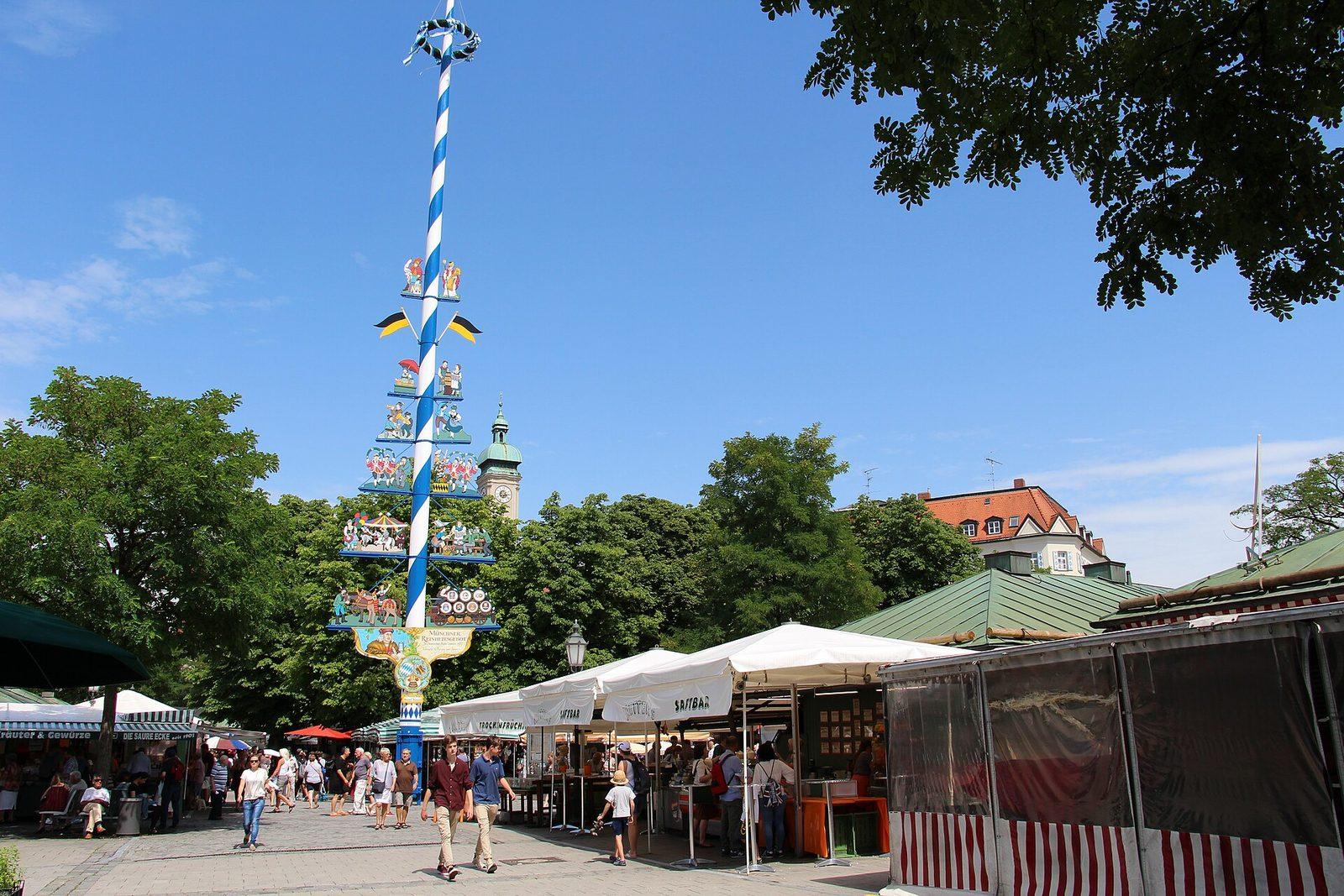
The painted maypole and market stalls at Viktualienmarkt

Viktualienmarkt

The permanent food market just off Marienplatz — cheese, game, honey, flowers, and a beer garden in the middle where you may bring your own food and only buy the beer.

≈ 60 min· Free

Mon–Fri 08:00–20:00, Sat 08:00–15:00; stalls set their own hours (core hours Mon–Fri 10:00–18:00 in summer, 10:00–17:00 in winter, Sat 10:00–15:00); no market on Sunday

Last verified: 25 Sept 2026Primary source: muenchen.de (official city portal) — ViktualienmarktMEVAYA dataset: Munich, 34 stops

♿ Accessibility: Flat and well-paved, easy for wheelchair users.

Before you go

Currency
Euro (€). Germany is still more cash-oriented than most of Europe — many Wirtshäuser, market stalls and beer-garden kiosks take cash only. Carry some.
Emergency
112 fire & ambulance · 110 police.
Time zone
CET / CEST.
Power
Type C/F sockets, 230V.
Getting around
U-Bahn, S-Bahn, tram and bus share one MVV ticket. The Tageskarte (day ticket) pays for itself in three rides, and a Gruppen-Tageskarte for up to five people is dramatically cheaper than singles. Validate paper tickets before boarding.
Airport transfer
S-Bahn lines S1 and S8 run from the airport to Hauptbahnhof and Marienplatz in about 40 minutes. Both lines run every 20 minutes, staggered into a train roughly every 10. A single ticket runs about €14.30-15.50 following the 2025 MVV zone reform (the airport is now its own outer zone, M); the Airport-City-Day-Ticket (~€17.50) is worth it if you're using transit again the same day.
Tipping
5–10%, by rounding up. Say the total as you hand over the money — do not leave coins on the table and walk out.
Beer garden law
The single most useful thing to know here: at the self-service tables of a traditional beer garden you are legally entitled to bring your own food and buy only the drinks. Locals turn up with bread, radishes and cheese. Table-service sections are a different matter.
Beer
A Maß is a full litre. A Helles is the standard pale lager; Weißbier is the wheat beer, traditionally drunk in the morning. Only six breweries may serve at Oktoberfest, and Augustiner is the one locals argue for.
The Weisswurst rule
Weisswurst is traditionally eaten before noon — the old saying is that the sausage should not hear the midday bells. You peel the skin off and do not eat it. Ordering it at 20:00 marks you out instantly.
Meal times
Lunch 12:00–14:00 , dinner from 18:00 . Kitchens often stop by 21:30.
Sundays
Shops closed by law , including the Viktualienmarkt. Beer gardens, museums and restaurants open. The Pinakotheken cost €1 on Sundays .
Oktoberfest
Runs roughly mid-September to early October. If you are not coming for it, avoid those two weeks entirely — hotel prices triple and the city centre is unusable.


And the quieter ones

The stops that rarely make a top-ten list but consistently make a better day.

  • Munich Residenz

    The Wittelsbach palace in the middle of the city — 130 rooms, the Antiquarium hall, and a treasury of crowns and reliquaries. Far less visited than it deserves, given what is inside.

  • Asamkirche

    A tiny late-baroque church squeezed between two houses, built by the Asam brothers as their private chapel and decorated to the point of delirium. Free, and takes fifteen minutes you will remember.

  • Eisbach river surfers

    A standing wave in a city-centre stream where surfers queue on the bank and ride one at a time, year-round, in wetsuits. Free, unlikely, and a genuinely great twenty minutes.

  • Deutsches Museum

    The largest science and technology museum in the world — a real U-boat cut open, mining tunnels under the building, aircraft hung from the ceiling. Enormous, hands-on, and the strongest single option in Munich with children.

There are 27 more curated stops in Munich.

We don't list them all here — it would read like a phone book. Open the planner and use the stop dropdown to browse every one of the 34 stops with its full detail: hours, closed days, typical visit length, booking lead time and what to know before you go. Mark any of them essential and the route builds around your choice.

Browse all 34 stops

A day MEVAYA would actually plan

One example, for Saturday, November 28

This is genuine planner output — a couple, a balanced pace, fixed defaults — not a hand-written itinerary. Your own dates, pace and interests will produce a different day.

Free to view · no account needed
  1. 1

    09:00

    Frauenkirche

    39 min

  2. 2

    09:52

    Viktualienmarkt

    69 min

  3. 3

    11:15

    Asamkirche

    29 min

  4. M

    11:53

    60 seconds to napoli München

    60 min

  5. 4

    13:22

    Alte Pinakothek

    123 min

  6. 5

    15:35

    Pinakothek der Moderne

    115 min

  7. 6

    17:57

    Eisbach river surfers

    40 min

  1. 1 · Frauenkirche
  2. 2 · Viktualienmarkt
  3. 3 · Asamkirche
  4. M · 60 seconds to napoli München
  5. 4 · Alte Pinakothek
  6. 5 · Pinakothek der Moderne
  7. 6 · Eisbach river surfers
Interactive map · OpenStreetMap · stop order

Score 96/100 · 7 stops · built from the city guide — pick your own date and this changes.

Plan your own dates

What to book before you fly

The stops where turning up on the day genuinely doesn't work.

  • Deutsches Museum

    a few days

    Enormous, and a timed ticket skips the entry queue in school holidays. Allow far more time than you plan to.

  • Residenz

    3–7 days

    Rarely sells out, but the Treasury is a separate ticket and the combined one is better value.

  • Nymphenburg

    3–7 days

    The park is free and needs no ticket — only the palace and the outlying pavilions are ticketed.

  • Popular Wirtshäuser

    2–7 days

    Steinheil 16 is full on a Monday. The good places are small and locals book them, especially for dinner.

Ad link · we may earn a commission — the price stays the same for you

Worth knowing on the ground

The things that catch people out in Munich specifically.

Munich is very safe — the traps here are commercial

Munich consistently ranks among the safest large cities in Europe, and there is no organised street-scam industry of the kind Prague or Rome have. What there is: The Hofbräuhaus premium. Not a scam, but the clearest tourist-price gradient in the city — ordinary food at elevated prices in a room that is now almost entirely visitors. Go for ten minutes to see it, then eat elsewhere. Beer-garden table confusion. Sitting at a table-service table with your own picnic will get you moved, and rightly. Look for the self-service section — usually unlaid wooden tables without a cloth — where bringing food is your legal right. Ticket inspectors on the U-Bahn. There are no barriers, which catches visitors out constantly. An unvalidated or missing ticket is a €60 on-the-spot fine, and "I did not know" is not a defence. Oktoberfest table reservations sold online. Tent reservations are free from the tents themselves and are gone months ahead; anything being resold at a price is a markup on something you cannot verify. Tables in the tents are also free to sit at if you arrive early enough. Bicycle lanes. Not a scam but a genuine hazard: they run alongside pavements, are often red, and cyclists move fast and will not slow down. Look before stepping.

Two warning colours, two meanings

Rip-off — you're being overcharged or worked. Overrated — nobody is cheating you, but the reality regularly disappoints.

Toilets

Use museums, larger attractions, stations and cafés as reliable fallback points.

Before you plan

Planning Munich: the practical part

How long to stay, how to get in, where to sleep and which dates change things — the decisions that come before the route.

How many days

Two days cover Munich's centre and a beer garden; three or four leave room for a palace, a proper museum day and the Isar. Keep the big museums apart — two in a row is where good days go stale.

1 day
Marienplatz, the Frauenkirche, the Viktualienmarkt and the Residenz in the morning; the Englischer Garten, the Eisbach surfers and a beer garden in the afternoon.
2 days
One museum day — the Alte Pinakothek or the Deutsches Museum, not both back to back — and Nymphenburg Palace or the Olympiapark with BMW Welt on the other.
3 days
The Isar by bike, the Glockenbachviertel and Haidhausen, and the NS-Dokumentationszentrum, which is free.
4–5 days
Day trips: the Dachau Concentration Camp Memorial Site, the lakes (Starnberger See by S-Bahn), Salzburg, or Neuschwanstein — a long day with tickets booked well ahead.
Oktoberfest
It runs from the second half of September into early October (in 2026: 19 September to 4 October). If you're not coming for it, avoid those weeks — hotels fill and prices climb.

Getting in and around

Munich's airport is well connected but far out, and the main station is being rebuilt around the trains. Both work — they just take a little longer than they look.

By train
Long-distance trains arrive at the Hauptbahnhof, whose rebuilding does not stop services; some also stop at Pasing or Ostbahnhof, which may be closer to your base.
From the airport
S-Bahn lines S1 and S8 reach the Hauptbahnhof and Marienplatz in about 40 minutes. The airport is in its own outer fare zone — buy the right ticket, or the Airport-City-Day-Ticket if you ride again that day.
From Memmingen
Low-cost flights to Memmingen are well over an hour and a half from Munich by coach.
By coach
Long-distance coaches use the ZOB at Hackerbrücke, next to the S-Bahn.
Getting around
U-Bahn, S-Bahn, tram and bus share one MVV ticket; the group day ticket covers up to five people. There are no barriers — validate paper tickets. The Isar paths make cycling easy.
By car
The area inside the Mittlerer Ring is a low-emission zone requiring a green sticker. Park at a Park & Ride and take the U-Bahn in.

Check current details: munich-airport.com · mvv-muenchen.de

Where to stay

Munich is compact, but the districts feel very different after dark. Choose between walkable, local or practical.

Altstadt / Lehel
Everything on foot, from Marienplatz to the Englischer Garten. The most expensive choice.
Maxvorstadt
The Pinakotheken, the university and cafés; well connected and calm in the evening.
Schwabing
The Englischer Garten, cafés and the Elisabethmarkt. Residential and quiet at night.
Glockenbachviertel / Isarvorstadt
Bars, restaurants and the Isar close by. The liveliest evenings in the centre.
Haidhausen
Squares, neighbourhood restaurants and the S-Bahn at Ostbahnhof for the airport. Local and good value.
Near the Hauptbahnhof
Practical, with the direct S-Bahn to the airport. Rougher at night, and right next to the Oktoberfest grounds.

City passes

Many of Munich's best stops are free, and state museums are almost free on Sundays — so check that before buying any pass.

Already free
The Englischer Garten, the Nymphenburg park, BMW Welt, the Olympiapark grounds, the Viktualienmarkt, the Frauenkirche and the NS-Dokumentationszentrum cost nothing.
Sundays
The Pinakotheken and several other state museums charge only a nominal fee for their permanent collections on Sundays.
München Card / CityTourCard
Both combine MVV transport with discounts at museums and sights. Neither includes free entry.
City Pass München
Free entry to around 45 sights, with or without transport. It pays off only with several paid entries a day.
Group day ticket
For two or more people, the MVV group day ticket is usually the cheapest way to get around.

Check current details: muenchen.de

Eating on the route

Munich eats early and simply: lunch 12:00–14:00, dinner from 18:00, and kitchens often stop by 21:30.

Beer gardens
At the self-service tables of a traditional beer garden you may bring your own food and buy only the drinks. Table-service sections are different.
Wirtshäuser
Traditional inns for Schweinsbraten and dumplings. Many are cash-only, and the small popular ones need a booking.
Viktualienmarkt
A standing lunch among the stalls, right in the centre. Closed on Sundays.
Weisswurst
Eaten before noon, peeled rather than bitten. Ordering it for dinner marks you out.
Hofbräuhaus
Worth ten minutes to see; the food and prices are better in almost any Wirtshaus nearby.

Seasons and dates that matter

Munich's year runs on beer and festivals. The weather decides the beer gardens; the calendar decides the hotel prices.

Spring (March–May)
Strong-beer season during Lent, the Frühlingsfest on the Theresienwiese in April and May, and the beer gardens opening with the first warm days.
Summer (June–August)
Beer gardens, the Isar and the Eisbach at their best; the Tollwood summer festival at the Olympiapark.
Autumn (September–October)
Oktoberfest from the second half of September, then quieter weeks with golden light in the Englischer Garten.
Winter (November–February)
Christmas markets from late November until 24 December, the Tollwood winter festival and Fasching in February.
Bavarian holidays
Bavaria has more public holidays than most of Germany, including Corpus Christi and 15 August. Shops close as on Sundays.

Check current details: muenchen.de

Munich: common questions

Answered from our own September 2026 verification pass.

Is the Olympiaturm open?

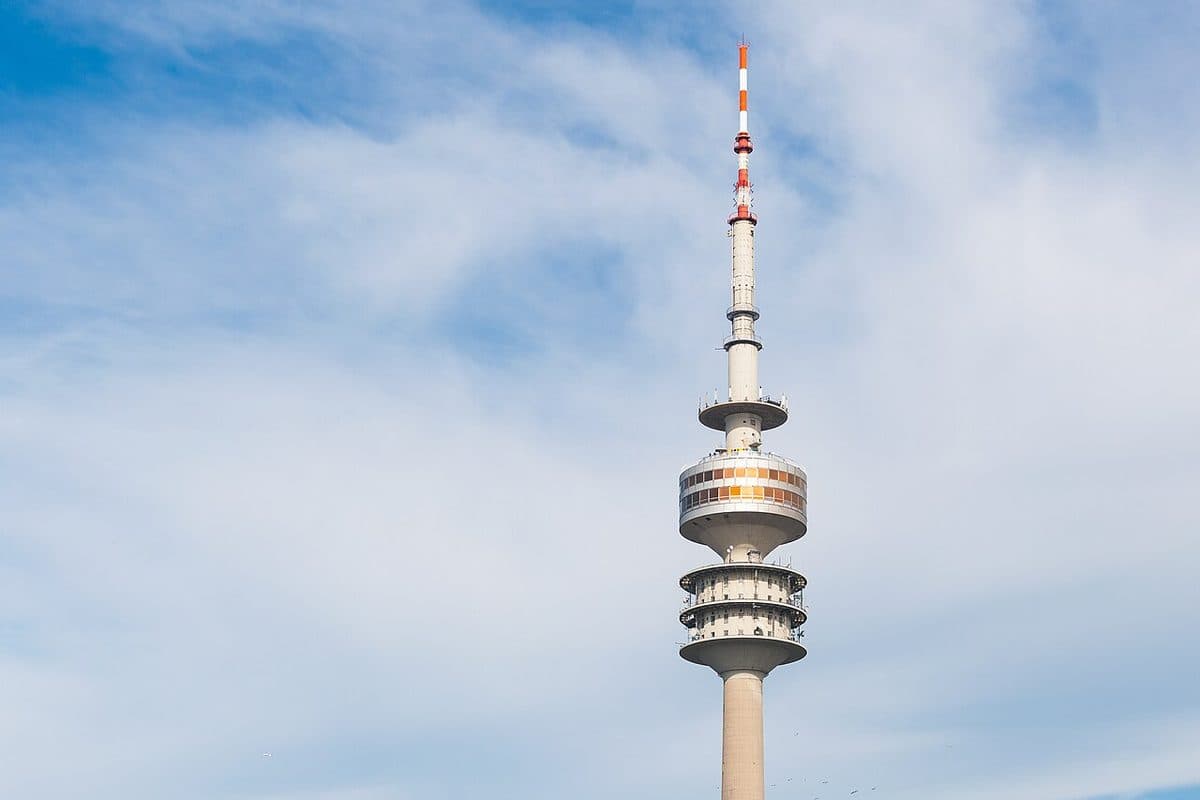
No. The tower has been closed since June 2024 for a €46 million structural overhaul covering elevators, utilities and fire safety, and, as of 11 October 2026, the operator expects it to reopen from October 2027. For a city-centre view in the meantime, the tower at Alter Peter — St Peter's Church behind Marienplatz — is the best substitute, though it is 300-plus narrow steps with no lift.

What time does the Glockenspiel play?

At 11:00 and 12:00 year-round, plus 17:00 from March to October. The show runs about ten minutes and is, by wide agreement including among locals, underwhelming — worth catching if you are passing, not worth building a morning around.

What are the opening hours of the Munich Residenz?

09:00–18:00 from April to around 19 October, then 10:00–17:00 through winter. Be aware that the Königsbau wing is closed for a multi-year renovation, so roughly 90 of the palace's 130 rooms are currently viewable rather than all of them. Schloss Nymphenburg follows the same seasonal pattern.

When is the Viktualienmarkt open?

Monday to Saturday, 08:00–20:00, closed Sundays. A handful of individual stalls take Mondays off even though the market as a whole trades, though the bakers, flower sellers and food stands generally do not. The beer garden at its centre rotates all six Munich breweries rather than pouring just one.

How many days do you need in Munich?

Two covers the old town, one major museum and an afternoon in the Englischer Garten comfortably. A third day makes sense if you want both Pinakotheken properly, or a day trip out — Munich is the easiest of the big German cities to see without rushing, because the centre is genuinely compact.

Ready when you are

Turn Munich into a day that actually works.

Pick your date, pace and companions. MEVAYA sequences the stops around real opening hours, closed days and walking distances — buy your City Pass for full access.

Plan Munich

Several cities on one trip

Munich is one of thirteen cities MEVAYA plans. The Europe trip planner puts your whole route in order, gives each city its days and checks closing days on your dates.

Plan Munich with other cities in the Europe trip planner

By direct train from Munich

  • Berlinabout 4 h · ICE
  • Viennaabout 4 h · Railjet
  • Pragueabout 5½–6 h · EuroCity
  • Veniceabout 6½–7 h · only a few a day